
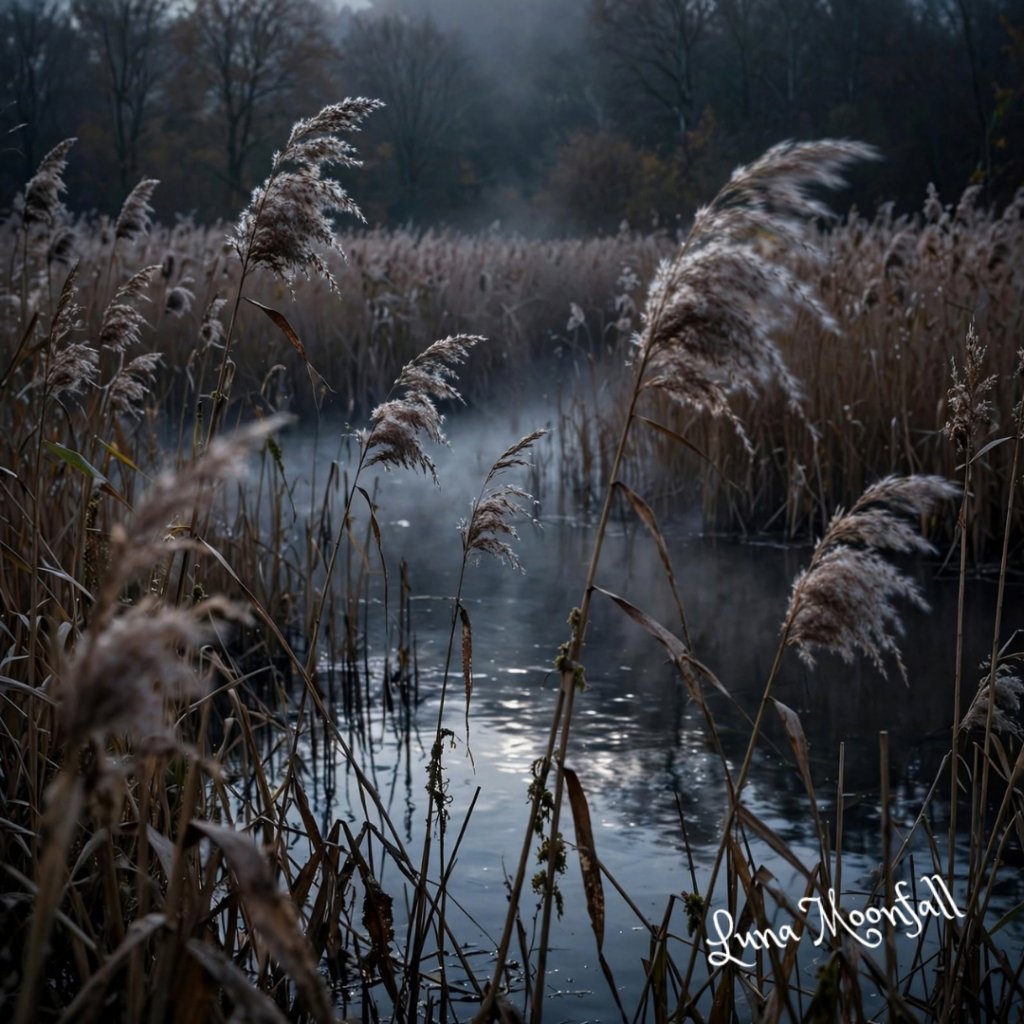
Reed is one of the plants associated with the final weeks of October in the modern Celtic Tree Calendar. Known by the Ogham name Ngetal, Reed is commonly connected with protection, healing, communication, boundaries, and resilience.
Its association with late October makes Reed an interesting plant to explore as Samhain approaches. This is the point in the seasonal cycle when the landscape is changing quickly, daylight is fading, and attention turns toward reflection, endings, ancestral traditions, and the mysteries of the darker half of the year.
Reed also has an unusual place in Celtic lore because the history behind Ngetal is complicated. Ogham itself is an ancient writing system, but the familiar Celtic Tree Calendar that places Ngetal from October 28 through November 24 is a much later interpretation.
That distinction is worth knowing, especially when exploring Celtic-inspired witchcraft today.
What Is Reed in the Celtic Tree Calendar?
In the commonly used modern Celtic Tree Calendar, Ngetal, or Reed, falls from October 28 through November 24. It follows Ivy, or Gort, and precedes Elder, or Ruis.
This places Reed across the beginning of November and the seasonal period surrounding Samhain.
Reed is often associated with:
- Protection
- Healing
- Truth
- Communication
- Boundaries
- Resilience
- Hidden knowledge
- Transition
- Strength through flexibility
These associations fit naturally with the physical characteristics of reed plants. Reeds grow in wetlands and along the edges of water, places that can feel distinctly liminal. They move with wind and water while remaining rooted below the surface.
For modern practitioners, Reed can represent staying grounded while moving through change.
A Note About the Celtic Tree Calendar
Before exploring Reed symbolism, it helps to separate two different things: Ogham and the Celtic Tree Calendar.
Ogham is a genuine historical writing system used primarily in Ireland and parts of Britain. Hundreds of surviving inscriptions date mainly from the early medieval period, and the letters were later discussed in medieval Irish manuscripts.
The thirteen-month Celtic Tree Calendar is different.
The calendar most people recognize today, with trees and plants assigned to specific 28-day periods, comes from the work of poet and mythographer Robert Graves, particularly his 1948 book The White Goddess. There is no surviving ancient Celtic source that describes a thirteen-month tree calendar or a Celtic birth-tree zodiac in this form.
The system has since become widely used in modern Pagan, witchcraft, and Druid-inspired practices.
For that reason, it is more accurate to describe the October association as modern Celtic tree lore or the modern Celtic Tree Calendar, rather than saying that ancient Celtic people followed this exact calendar.
Ngetal: The Ogham Letter of Reed
Ngetal is the name traditionally associated with an Ogham character representing the sound NG.
The plant identification is less straightforward than many modern Ogham guides suggest. Medieval sources and later scholarship give different interpretations of the name, and Reed is only one of the plants associated with Ngetal. Some traditions also connect it with broom, while the name itself has been interpreted through ideas involving wounding and healing.
This ambiguity is part of what makes Ngetal interesting.
Later interpretations place the letter at an intersection between ideas of healing and harm, cutting and mending, protection and vulnerability.
For modern magical practice, these themes can be understood as part of the same process. Sometimes healing means removing something that has become harmful. An old pattern may need to end. A boundary may need to be drawn. Something unhealthy may need to be cleared before new growth can begin.
Reed Symbolism and Meaning
Protection
Reeds form dense stands that provide shelter for birds and other wildlife. A reed bed can also create a natural screen between one area and another.
Symbolically, this makes Reed a useful representation of protection and boundaries.
In witchcraft, Reed can represent the line between:
- What belongs to you and what does not
- Your energy and someone else’s
- Your private life and the outside world
- The past and the present
- What you are ready to release and what you intend to carry forward
Protection does not always need to be rigid. A boundary can move without disappearing.
Flexibility
One of the most recognizable qualities of a reed is its ability to bend.
It moves with the wind instead of trying to resist every gust.
This makes Reed a useful symbol for adaptability.
Flexibility isn’t the same as weakness. Something rigid can snap under pressure, while something that bends may survive the same storm.
For magical work, Reed can represent changing your approach without abandoning your intentions.
You can bend. You can pause. You can change direction. You can still remain rooted.
Healing
Some medieval word-kennings associated with Ngetal contain references to physicians and healing. The historical interpretation is complex, but healing became an important part of the later symbolic tradition surrounding this Ogham letter.
This makes Reed appropriate for magical work focused on recovery, restoration, and tending to what has been neglected.
Its healing symbolism can be approached broadly, including:
- Emotional healing
- Recovering from difficult experiences
- Restoring personal boundaries
- Rebuilding confidence
- Releasing old patterns
- Making peace with change
Reed and Communication
The hollow stem of a reed has long made the plant useful for whistles, pipes, and other simple instruments.
That physical quality gives Reed a natural symbolic connection with voice and communication.
A hollow reed becomes useful because something can move through it.
For modern magical practice, this can represent finding your voice, speaking honestly, listening carefully, or allowing an important message to pass through without distorting it.
Reed can therefore be a useful symbol when working with:
- Difficult conversations
- Speaking your truth
- Clear communication
- Divination
- Writing
- Storytelling
- Song and music
- Messages and signs
The message isn’t always to speak more. Sometimes it is to listen more carefully.
Reed and Boundaries
There is something fitting about a plant that grows along the boundary between land and water being associated with boundaries.
Reed thrives where environments meet.
It can exist at the edge.
That makes it a useful symbol for liminal spaces—places, moments, and experiences that exist between one state and another.
October is full of these transitions.
The harvest season is ending. The trees are becoming bare. The nights are growing longer. Samhain approaches.
The natural world seems to pause between abundance and dormancy.
Reed belongs naturally in that landscape.
Its symbolism raises a useful question:
Where do you need a clearer boundary?
Perhaps the answer involves another person. Perhaps it involves an old habit, your time, your attention, or your energy.
Reed and Samhain
The Reed period in the modern Celtic Tree Calendar begins on October 28, placing Samhain within its traditional date range.
This has contributed to the modern association between Reed and the Samhain season.
Samhain itself is an important Gaelic seasonal festival with historical roots, while many of the specific spiritual practices associated with it today come from later folklore, modern Pagan traditions, and contemporary witchcraft.
For modern practitioners, Reed can complement Samhain themes such as:
- Thresholds
- Ancestors
- Memory
- Protection
- Divination
- Endings
- Transformation
- The unknown
The reed’s position at the edge of water also makes it an evocative symbol for crossing from one state into another.
That doesn’t need to be interpreted literally. It can simply represent standing at a threshold and considering what comes next.
Reed in Celtic-Inspired Witchcraft
Reed can be incorporated into modern magical practice through symbolism, meditation, altar work, and seasonal reflection.
Reed Protection Magic
Use Reed symbolism when creating a protective intention around your home or personal space.
You might place an image of reeds on your altar or use a piece of dried reed as a symbolic representation of the boundary you are creating.
As you work, focus on the idea:
I remain rooted while allowing what does not belong to me to pass by.
Reed Boundary Ritual
Write down one boundary you need to establish or strengthen.
It could involve your time, energy, relationships, work, or personal space.
Fold the paper and place it beneath a representation of Reed.
Spend a few minutes visualizing yourself standing beside a reed bed.
The wind moves through the stems.
The reeds bend.
Their roots remain.
Use that image as a reminder that healthy boundaries don’t require you to become hard or inflexible.
Reed Divination
Reed can also be used as a symbolic focus for divination.
Before a tarot, oracle, or Ogham reading, spend a few moments thinking about the Reed qualities of clarity, communication, and hidden information.
You might ask:
- What am I not seeing clearly?
- Where do I need a stronger boundary?
- What truth am I avoiding?
- What needs to be released?
- Where would flexibility serve me?
- What message needs to be heard?
These questions can work especially well during the darkening part of the year.
Reed Meditation
Imagine yourself standing beside a quiet wetland at dusk.
Reeds move around you in the wind.
You don’t need to fight the movement. Simply notice it.
With each breath, imagine yourself becoming more rooted.
With each exhale, allow tension to move away.
When you feel settled, ask yourself:
What can bend without breaking?
Sit quietly and notice what comes to mind.
Reed Correspondences
Because the modern Celtic Tree Calendar is an interpretive system rather than a historically documented magical correspondence chart, Reed correspondences vary between traditions.
The following associations can be used as modern symbolic correspondences for witchcraft and seasonal practice:
| Correspondence | Reed |
|---|---|
| Ogham | Ngetal |
| Sound | NG |
| Calendar period | October 28 – November 24 |
| Primary themes | Protection, healing, communication, flexibility |
| Season | Late autumn |
| Elemental imagery | Water and Air |
| Magical focus | Boundaries, truth, healing, transition |
| Seasonal connection | Samhain |
| Symbolic colors | Deep green, charcoal, brown, muted gold |
| Magical uses | Protection, reflection, divination, boundary work |
Reed, Resilience and the Art of Bending
Perhaps the most useful lesson of Reed is resilience.
We often think of resilience as becoming stronger, tougher, or harder to hurt.
Reed offers another way to look at it.
Sometimes resilience means remaining flexible.
A storm comes.
The reed bends.
The storm passes.
The reed rises again.
This is a fitting image for the darker half of the year.
Autumn asks us to release things that cannot remain. Winter asks us to conserve our energy. The season around Samhain encourages reflection on endings, memory, and transformation.
Reed doesn’t need to represent resistance to every change.
It can represent staying rooted enough to move through change without losing yourself.
A Reed-Inspired Samhain Reflection
If you work with Samhain as a time of reflection, Reed makes a natural companion.
Light a candle and sit somewhere quiet.
Think about the year behind you.
Ask yourself:
- What am I ready to leave behind?
- What boundary needs to become stronger?
- Where have I been too rigid?
- Where have I bent too far?
- What truth needs to be spoken?
- What part of myself needs attention?
You don’t need to answer every question. Choose the one that catches your attention.
Write your response in your journal and give yourself some time to sit with it.
The purpose isn’t to force a transformation overnight. Sometimes recognizing what needs to change is the first step.
Working With Reed in Your October Practice
Reed is particularly suited to the final days of October, when the seasonal atmosphere begins shifting toward Samhain.
You might use Reed symbolism when:
- Setting autumn boundaries
- Cleansing your home
- Preparing a Samhain altar
- Journaling about endings
- Practicing divination
- Reflecting on personal growth
- Working with healing intentions
- Releasing an outdated habit
- Preparing for the darker half of the year
- Exploring your relationship with change
You can work with Reed without physically harvesting or collecting the plant.
A photograph, drawing, candle color, piece of artwork, or mental image can carry the symbolism just as effectively for a modern ritual.
Frequently Asked Questions About Reed
What is the Celtic meaning of Reed?
In modern Celtic Tree Calendar traditions, Reed is associated with Ngetal and is commonly linked with protection, healing, communication, truth, flexibility, and hidden knowledge.
What dates are associated with Reed in the Celtic Tree Calendar?
The commonly used version of the calendar places Ngetal, or Reed, from October 28 through November 24.
What is the Ogham letter for Reed?
Reed is associated with Ngetal, the Ogham letter representing the NG sound. The historical interpretation of the name is complicated, however, and medieval sources contain multiple associations for the letter.
Is the Celtic Tree Calendar ancient?
The Ogham writing system is ancient, but the familiar thirteen-part Celtic Tree Calendar is not an attested ancient Celtic calendar. The system was developed in modern times, particularly through Robert Graves’s The White Goddess.
Is Reed a tree?
No. Reed is a wetland plant rather than a tree. Its inclusion in the modern Celtic Tree Calendar comes from the interpretation of the Ogham letter Ngetal.
Why is Reed associated with Samhain?
The modern Celtic Tree Calendar places Reed from October 28 through November 24, meaning that the period includes the beginning of November and the Samhain season.
How can I use Reed in witchcraft?
Reed can be used symbolically in protection, boundary work, healing intentions, divination, meditation, journaling, and seasonal rituals. You can work with an image or representation of the plant without needing to harvest it.
Closing Thoughts
Reed occupies an intriguing place in Celtic-inspired witchcraft.
Its Ogham connection reaches back to a genuine historical writing tradition, while its place in the thirteen-part Celtic Tree Calendar belongs to a much more recent spiritual interpretation.
That doesn’t make the symbolism any less useful.
A reed grows at the edge of water.
It bends with the wind.
It remains rooted beneath the surface.
And when the storm passes, it rises again.
As October draws to a close, Reed offers a fitting symbol for transition: knowing what to hold onto, knowing what to release, and knowing when strength means standing firm and when it means allowing yourself to bend.