
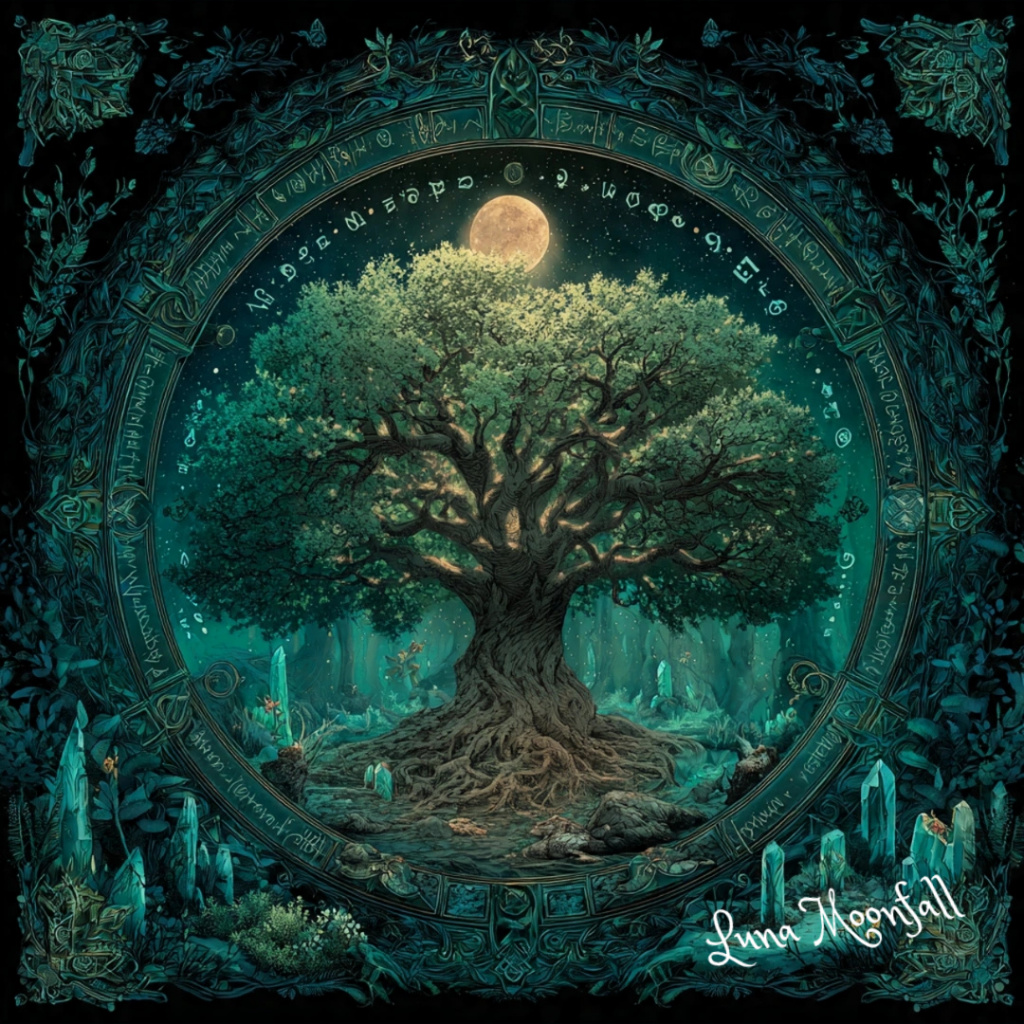
The Celtic Tree Calendar is a modern spiritual calendar that assigns thirteen sacred trees to different periods of the year. Popular among contemporary Druids, Pagans, witches, and nature-based spiritual practitioners, the calendar follows thirteen lunar months, with each month represented by a tree believed to embody unique lessons, energies, and symbolism.
For many people, the Celtic Tree Calendar provides a meaningful way to connect with nature’s cycles. Each tree serves as a guide through its designated month, offering insight into personal growth, seasonal changes, and spiritual reflection. Whether you are interested in Celtic mythology, Druid traditions, tree magic, or simply developing a deeper relationship with the natural world, the Celtic Tree Calendar offers a fascinating framework for exploration.
Although the calendar is commonly associated with the ancient Druids, its origins are more complex than many realize. The modern version of the Celtic Tree Calendar was largely popularized by author Robert Graves in his influential 1948 book The White Goddess. While historians debate the historical accuracy of Graves’ theories, the calendar continues to hold significance within modern Pagan and Druid communities.
The Sacred Relationship Between Trees and the Celts
Trees occupied an important place in Celtic culture long before the creation of the modern Celtic Tree Calendar. Ancient Celtic peoples viewed certain trees as sacred and often associated them with wisdom, protection, healing, fertility, and communication with the spirit world.
Sacred groves served as gathering places for rituals, ceremonies, and community events. The Druids, who served as priests, teachers, judges, and keepers of knowledge, were believed to conduct important rites within these groves. Some scholars suggest that the word “Druid” may be connected to an ancient word for oak, highlighting the importance of trees within Celtic spirituality.
Throughout Celtic mythology, trees frequently appear as symbols of wisdom, gateways to other realms, and sources of magical power. Certain trees were thought to possess unique spiritual qualities, and many became woven into folklore, legends, and seasonal celebrations.
Who Were the Druids?
The Druids were members of the learned class within ancient Celtic societies. Historical accounts describe them as philosophers, judges, healers, teachers, poets, and spiritual leaders. Much of what we know about the Druids comes from Roman writings, archaeological evidence, and later Irish and Welsh texts.
Unlike modern stereotypes, there is no surviving evidence that ancient Druids followed a formal tree zodiac or tree calendar exactly as it is presented today. However, trees clearly held symbolic and spiritual importance within Celtic culture, making them a natural foundation for modern spiritual systems inspired by Celtic traditions.
The White Goddess and Robert Graves’ Influence
Any discussion of the Celtic Tree Calendar must include Robert Graves and his book The White Goddess. Published in 1948, the book proposed a complex theory connecting Celtic mythology, poetry, tree symbolism, and the ancient Ogham alphabet.
Graves suggested that the Ogham script contained hidden tree associations and that these associations formed the basis of a sacred lunar calendar used by ancient Druids. His ideas proved enormously influential among modern Pagans, Druids, and occultists, even though many historians dispute his conclusions.
The Connection Between Ogham and the Celtic Tree Calendar
The Ogham alphabet is an ancient writing system used primarily in Ireland between the fourth and seventh centuries CE. Consisting of lines and notches carved along a central stemline, Ogham appears on stone monuments throughout Ireland and parts of Britain.
Several Ogham characters became associated with specific trees in medieval manuscripts. These associations inspired later writers and spiritual practitioners to develop systems connecting the Ogham alphabet to tree symbolism.
The 13 Tree Months of the Celtic Tree Calendar
The modern Celtic Tree Calendar divides the year into thirteen lunar months, each represented by a sacred tree. Every tree carries its own mythology, symbolism, and spiritual lessons.
Birch (Beth) – December 24 to January 20
Keywords: Renewal, rebirth, purification, fresh starts.
Birch marks the beginning of the Celtic Tree Calendar and symbolizes new beginnings. As one of the first trees to colonize cleared land, Birch represents resilience and the ability to thrive after challenges.
Rowan (Luis) – January 21 to February 17
Keywords: Protection, intuition, vision, spiritual awareness.
Rowan has long been associated with protection in Celtic folklore. Its bright red berries and pentagram-shaped seed patterns led many to believe it could ward off harmful influences.
Ash (Nion) – February 18 to March 17
Keywords: Wisdom, connection, inspiration, spiritual growth.
Ash symbolizes the connection between different realms and encourages balance between spiritual aspirations and everyday life.
Alder (Fearn) – March 18 to April 14
Keywords: Courage, confidence, leadership, transformation.
Alder supports decisive action and determination during times of change.
Willow (Saille) – April 15 to May 12
Keywords: Moon magic, intuition, dreams, emotional healing.
Willow is associated with lunar energy, psychic awareness, and emotional wisdom.
Hawthorn (Huath) – May 13 to June 9
Keywords: Fertility, enchantment, transformation, faery lore.
Hawthorn is closely connected to Beltane, magical thresholds, and Celtic folklore surrounding the fae.
Oak (Duir) – June 10 to July 7
Keywords: Strength, wisdom, endurance, authority.
Oak remains one of the most revered trees in Celtic spirituality and is often associated with the Druids themselves.
Holly (Tinne) – July 8 to August 4
Keywords: Protection, resilience, balance, perseverance.
Holly symbolizes protection and the seasonal balance represented by the Holly King and Oak King myth.
Hazel (Coll) – August 5 to September 1
Keywords: Wisdom, creativity, inspiration, learning.
Hazel is associated with sacred knowledge and appears prominently in Irish mythology.
Vine (Muin) – September 2 to September 29
Keywords: Harvest, abundance, transformation, self-discovery.
Vine represents abundance, adaptability, and the rewards of previous efforts.
Ivy (Gort) – September 30 to October 27
Keywords: Persistence, loyalty, endurance, determination.
Ivy teaches resilience and steady growth through life’s challenges.
Reed (Ngetal) – October 28 to November 24
Keywords: Truth, communication, insight, reflection.
Reed encourages honest communication and uncovering hidden truths.
Elder (Ruis) – November 25 to December 23
Keywords: Endings, transformation, wisdom, rebirth.
Elder concludes the annual cycle and reminds us that endings often create opportunities for new beginnings.
Is the Celtic Tree Calendar Historically Accurate?
Most historians agree that there is little evidence supporting the existence of a formal thirteen-tree calendar used by ancient Druids. The modern Celtic Tree Calendar is largely based on interpretations popularized by Robert Graves and later adopted by contemporary Pagan and Druid communities.
While its historical roots may be debated, the Celtic Tree Calendar remains a valuable spiritual framework that helps many people connect with nature and seasonal cycles.
Closing Thoughts
The Celtic Tree Calendar combines Celtic mythology, tree symbolism, seasonal awareness, and modern spiritual practice into a unique annual journey. If approached either as a spiritual path, a study of folklore, or a way to connect more deeply with nature, the thirteen sacred trees continue to inspire seekers around the world.
In the articles linked above, we’ll explore each tree month in greater depth, including mythology, magical correspondences, folklore, and practical ways to work with each tree in modern witchcraft and Pagan practice.