
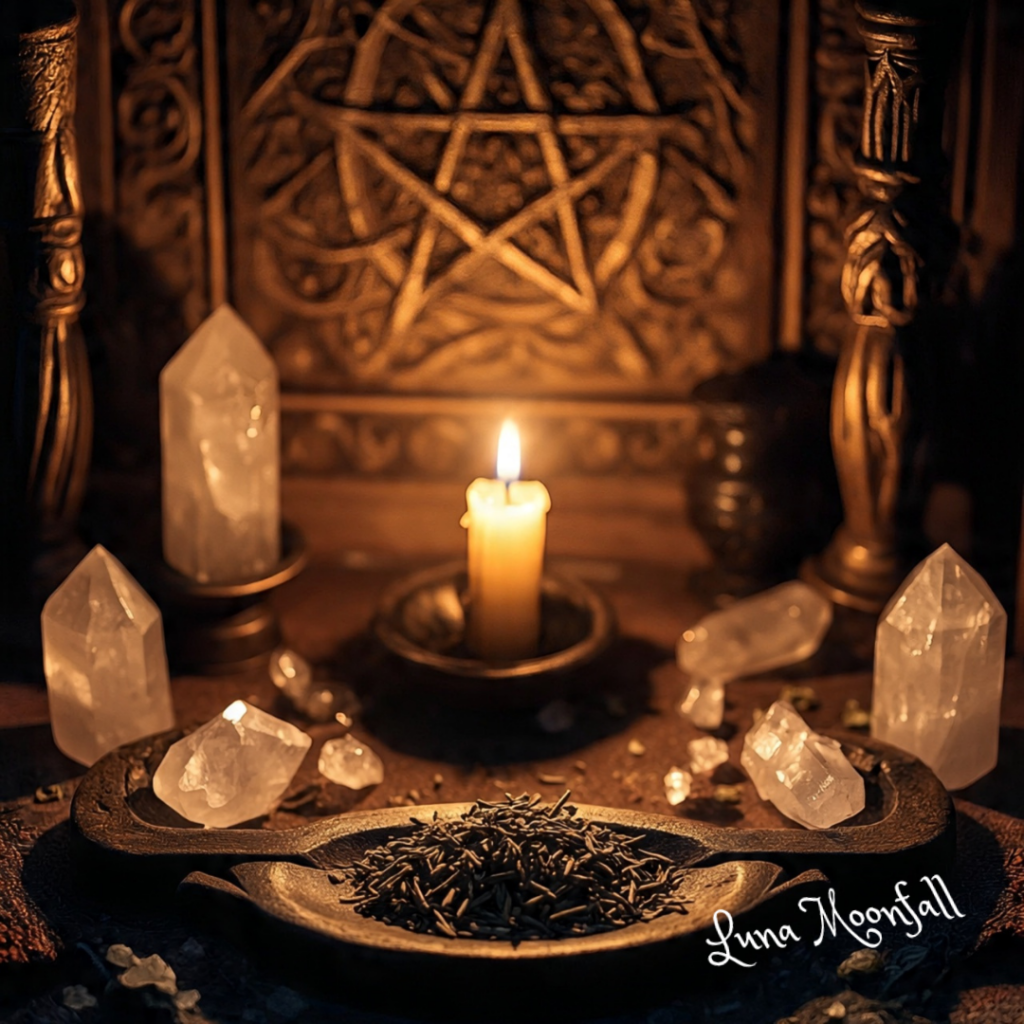
If you’ve spent any time exploring witchcraft, paganism, spirituality, or modern magical practices, you’ve probably come across the terms smoke cleansing and smudging.
They’re often used interchangeably online, but they don’t mean exactly the same thing.
At first glance, both may involve burning herbs, allowing fragrant smoke to fill a space, and using that smoke as part of a spiritual practice. However, there are important cultural and historical distinctions between the two.
Understanding the difference doesn’t mean you have to give up smoke cleansing. In fact, learning about the traditions behind these practices can help you create a cleansing ritual that feels authentic to your own spiritual path while approaching other cultures with respect.
Smoke Cleansing vs. Smudging: At a Glance
| Smoke Cleansing | Smudging |
|---|---|
| A broad term for using smoke as part of a cleansing or spiritual practice. | A term commonly used to describe specific Indigenous ceremonial practices. |
| Can be found in many cultures and spiritual traditions. | Refers to traditions belonging to particular Indigenous communities. |
| May use herbs, resins, incense, or woods. | Plants and ceremonial methods vary according to the specific Indigenous tradition. |
| Can be adapted to an individual’s spiritual practice. | Should not be treated as a generic ritual that anyone can copy. |
The simplest distinction is this: smoke cleansing is a broad description of using smoke for spiritual or ritual cleansing, while smudging refers to particular ceremonial practices rooted in Indigenous traditions.
This post may contain affiliate links. If you choose to make a purchase through these links, I may earn a small commission at no additional cost to you. These commissions help support Moonfall Metaphysical and allow me to continue creating free content, guides, and resources for the community.
I only recommend products, books, and tools that align with the spirit of this content and that I believe may genuinely be interesting, useful, or inspiring to readers.
What Is Smudging?
Smudging is a term commonly used in reference to ceremonial practices among various Indigenous peoples in North America. These traditions are not all identical, and the plants, prayers, ceremonies, and protocols involved can differ considerably between communities.
Depending on the specific tradition, plants such as sage, cedar, sweetgrass, or tobacco may have important ceremonial roles. The smoke may be used in connection with prayer, purification, offerings, blessings, or other spiritual purposes.
That is very different from the simplified version of smudging that is often presented online as simply lighting a bundle of white sage and waving the smoke around a room.
For many Indigenous communities, these practices are connected to culture, spirituality, community, and teachings passed down through generations.
It’s also important to recognize that Indigenous cultures are not a single culture. There is no one universal Indigenous smudging ceremony, and practices can differ between nations and communities.
For someone outside those communities, using the word “smudging” to describe a personal smoke-cleansing ritual can unintentionally blur those cultural distinctions.
Key takeaway: Smudging isn’t simply another word for smoke cleansing. It refers to specific cultural and ceremonial traditions, and those traditions deserve to be understood and respected on their own terms.
What Is Smoke Cleansing?
Smoke cleansing is a much broader term for using smoke from plants, woods, resins, or incense as part of a spiritual or ritual practice.
Practices involving fragrant smoke can be found throughout history and across many different cultures. Burning aromatic plants and resins has been associated with purification, prayer, offerings, protection, meditation, and sacred space in numerous traditions.
For modern witches and pagans, “smoke cleansing” can be a useful umbrella term for a personal ritual intended to refresh the energy of a room, object, altar, or ritual space.
You might use smoke cleansing when:
- Moving into a new home
- Preparing your altar or ritual space
- Beginning a new magical practice
- Closing out a difficult period
- Refreshing the energy of a room
- Preparing for meditation, tarot, or spellwork
- Creating a transition between everyday life and ritual time
Some practitioners also use smoke cleansing symbolically as a way of marking a fresh start or letting go of something they no longer wish to carry forward.
Smoke Cleansing Herbs and Botanicals
One of the advantages of using the term smoke cleansing is that you aren’t limited to one particular plant or tradition. You can choose botanicals that make sense within your own spiritual practice. You can source herbs individually, or get ready made kits.
Rosemary
Rosemary has a long history of association with remembrance, protection, purification, and cleansing in European folk traditions. It can be a lovely choice when you want a cleansing ritual with a protective quality.
Juniper
Juniper has been used in various European folk traditions for protection and purification. It is particularly interesting for practitioners exploring Northern European or Scottish traditions.
Mugwort
Mugwort is often associated with dreams, intuition, divination, and liminal spaces in modern witchcraft. Its smoke can be especially fitting before dreamwork or divination.
Pine
Pine can symbolize renewal, resilience, cleansing, and fresh energy. Because pine is so abundant in many parts of North America, it can also be a meaningful locally sourced botanical when used responsibly.
Lavender
Lavender is commonly associated with peace, relaxation, harmony, and purification. Its gentle fragrance makes it a popular choice for creating a calm atmosphere.
Garden Sage
Garden sage, or culinary sage, is another option sometimes chosen for smoke cleansing. If you’re looking for an alternative to white sage, using a plant that you can grow or source locally may be a better fit for your practice.
There is no requirement that a smoke-cleansing ritual use a particular herb. Your choice can be based on your spiritual symbolism, local availability, scent preferences, or the plants that already have meaning within your practice. You can also use a mortar and pestle to make your herbs into a fine powder to use for incense, anointing candles, or for burning in a fireproof dish.
What About White Sage?
White sage is one of the plants most commonly associated with the modern commercial version of “smudging.” However, Salvia apiana has specific cultural significance for Indigenous peoples of the region where it grows.
Rather than treating white sage as the default cleansing herb, consider learning about the plant’s cultural context and choosing alternatives that have a meaningful connection to your own practice.
This can also encourage a more personal approach to witchcraft. A bundle of rosemary from your garden, locally grown lavender, or another plant with personal significance can make a smoke-cleansing ritual feel much more connected to your own path.
What About Palo Santo?
Palo santo is another aromatic wood frequently marketed for spiritual cleansing. However, it has its own cultural history and environmental considerations, so it shouldn’t simply be treated as another interchangeable “smudging stick.”
If you choose to use palo santo, take the time to research where it comes from and how it was harvested. Responsible sourcing matters.
As with any botanical or wood used in spiritual practice, it’s worth asking where the plant came from, whether harvesting it is sustainable, and whether your purchase supports responsible producers.
And What About Saining?
If your spiritual practice has Celtic or Scottish influences, you may also encounter the word saining.
Saining is associated particularly with Scottish Gaelic folk tradition and can involve acts of blessing, protection, purification, and ritual preparation. Historical and traditional practices can include spoken charms or prayers, water, fire, and sometimes smoke or burning plants.
Unlike the modern generic use of “smudging,” saining belongs to a particular cultural and historical context.
For people exploring Scottish or Gaelic traditions, learning about saining can be a fascinating way to discover a culturally rooted form of blessing and protection rather than borrowing terminology from an unrelated tradition.
That said, it’s worth approaching Celtic and Gaelic traditions with the same care we should bring to any living cultural tradition. “Celtic” isn’t a single spiritual system, and modern witchcraft should not automatically be presented as identical to historical folk practice.
Key takeaway: If you’re interested in Scottish or Gaelic traditions, researching saining can offer a meaningful alternative framework for blessing and purification.
Why Does the Terminology Matter?
You might wonder whether the difference between “smudging” and “smoke cleansing” is really important.
For many practitioners, it comes down to respect and accuracy.
When we use “smudging” as a generic word for any ritual involving smoke, we can unintentionally strip a culturally specific practice of its history and meaning.
Using smoke cleansing when that’s what we’re actually doing is a simple way to be more precise.
It also gives us the opportunity to learn about the many different ways people throughout history have worked with plants, fire, fragrance, prayer, and ritual.
Can Witches Smoke Cleanse?
Absolutely.
There is no need to use the word “smudging” to practice a smoke-cleansing ritual.
Modern witches can create their own cleansing rituals using plants, incense, resins, or other materials that fit their spiritual practice. You might choose rosemary for protection, lavender for peace, mugwort for divination, or pine for renewal.
You can also create a simple ritual around intention rather than relying on a particular cultural ceremony.
For example, you might light your chosen incense, open a window, and slowly move through your home while focusing on the intention of releasing stagnant energy and welcoming something new.
The ritual doesn’t need to be elaborate. The meaning you give to the practice is part of what makes it personal.
How to Create a Simple Smoke Cleansing Ritual
If smoke cleansing feels right for your practice, you can keep the ritual very simple.
1. Choose Your Botanical or Incense
Select something that has meaning for you. Consider rosemary, lavender, pine, juniper, mugwort, incense, or another appropriately sourced botanical.
2. Set Your Intention
Before lighting anything, decide what you’re hoping to release or invite into the space.
Your intention might be:
- “I release what no longer serves me.”
- “I welcome peace and protection into this home.”
- “I clear this space so I can begin again.”
- “I create a peaceful space for meditation and divination.”
3. Light Your Smoke Source Safely
Use a fireproof dish, cauldron, or incense holder and keep the burning material away from curtains, paper, pets, children, and anything else that could catch fire.
Good ventilation is also important. Smoke cleansing should never mean filling an enclosed room with excessive smoke.
4. Move Through the Space
Allow the smoke to move gently through the room while focusing on your intention. You might begin at the entrance and work around the room, paying particular attention to your altar, doorway, windows, or other areas that feel significant to you.
5. Finish the Ritual
Once you’re finished, safely extinguish your smoke source and allow the space to settle.
You might finish with a short affirmation, prayer, meditation, tarot reading, or journaling. Writing down your intention before or after a cleansing ritual can be a simple way to make the experience more personal and track how your practice develops over time.
A guided journal can be particularly useful if you enjoy combining witchcraft with manifestation. A moon-phase or manifestation journal gives you a dedicated place to record intentions, affirmations, goals, and reflections alongside your spiritual practice.
Once your space has been cleansed, you might want to spend a few quiet moments connecting with the energy you’ve created. This can be a lovely time for meditation, journaling, or a tarot reading. Pulling a single card can give you something to reflect on as you begin your ritual work.
The Crow Tarot by MJ Cullinane is a particularly atmospheric deck for this kind of practice, with its striking crow and raven imagery making it a natural companion for witchy rituals, shadow work, and divination.
Smoke Cleansing Without Smoke
Of course, you don’t actually need smoke to cleanse a space.
If you live with someone who is sensitive to smoke, have pets, live in an apartment, or simply don’t enjoy burning things indoors, there are plenty of alternatives.
You could try:
- Sound cleansing with bells, chimes, or singing bowls
- Opening windows and doors to symbolize releasing stagnant energy
- Using ritual water
- Sprinkling salt as part of a cleansing practice
- Using essential oils safely in a diffuser
- Taking a ritual bath or shower
- Using visualization or meditation
- Cleaning and physically decluttering the space as part of your ritual
Sometimes the most magical cleansing ritual is simply opening the windows, cleaning your altar, sweeping the floor, and deciding that you’re ready for a fresh beginning.
Smoke Cleansing vs. Smudging: The Bottom Line
So, what’s the difference between smoke cleansing and smudging?
Smoke cleansing is a broad term for using smoke as part of a spiritual or ritual cleansing practice. It can be incorporated into many different personal and cultural traditions.
Smudging refers to specific Indigenous ceremonial traditions and should not be treated as a generic synonym for burning herbs and moving smoke around a room.
And if you’re interested in Scottish or Gaelic traditions, saining offers another fascinating area of study involving traditional practices of blessing, protection, and purification.
Learning these distinctions doesn’t make witchcraft less accessible. If anything, it gives us more opportunities to explore the rich history of plants, folklore, ritual, and spiritual practice.
Choose the terminology that accurately reflects what you’re practicing, learn about the traditions that inspire you, source your materials responsibly, and approach other cultures with respect.
After all, being intentional is at the heart of witchcraft… and that includes being intentional about the words we use.
Frequently Asked Questions
Is smoke cleansing the same as smudging?
No. Smoke cleansing is a broad term for using smoke as part of a cleansing or spiritual ritual. Smudging is commonly used to describe specific Indigenous ceremonial traditions. The terms are therefore not interchangeable.
Can witches smoke cleanse?
Yes. Witches can incorporate smoke cleansing into their practices using appropriately sourced herbs, incense, resins, or woods that fit their spiritual traditions and intentions.
What herbs can I use for smoke cleansing?
Popular choices include rosemary, lavender, juniper, pine, and mugwort. The best choice depends on your intention, spiritual tradition, scent preferences, and what can be sourced responsibly where you live.
What is the best alternative to white sage?
There isn’t one universal replacement. Garden sage, rosemary, lavender, pine, and other locally available botanicals can all be used for smoke cleansing depending on your intention and personal practice.
What is saining?
Saining is a traditional Scottish practice associated with blessing, protection, and purification. Historical forms can involve prayers or charms, water, fire, and sometimes smoke or burning plants.
Can I cleanse my home without burning herbs?
Yes. Sound, water, meditation, visualization, fresh air, physical cleaning, and other rituals can all be used as alternatives to smoke cleansing.