The December Full Moon, known as the Cold Moon, rises during the darkest season of the year in the Northern Hemisphere. Its place near the Winter Solstice makes it a fitting time to reflect on the months behind you, reconnect with your inner life, and consider what you want to carry into the new year.
In 2026, the Cold Moon reaches its fullest phase in Cancer, the zodiac sign associated in astrology with home, family, intuition, and emotional security. This year’s full moon is also a supermoon, making it an especially notable lunar event to observe.
For those who practice witchcraft or nature based living, the December Full Moon offers inspiration for release rituals, candle magick, tarot readings, crystal work, and quiet moments of reflection. You can also connect its themes with Yule and the return of the light following the Winter Solstice.
In this guide, you’ll discover the December 2026 Full Moon date and time, the spiritual meaning of the Cold Moon, its astrological associations, and practical rituals and affirmations to welcome the turning of the year.
This post may contain affiliate links. If you choose to make a purchase through these links, I may earn a small commission at no additional cost to you. These commissions help support Moonfall Metaphysical and allow me to continue creating free content, guides, and resources for the community.
I only recommend products, books, and tools that align with the spirit of this content and that I believe may genuinely be interesting, useful, or inspiring to readers.
🌕 December 2026 Cold Moon at a Glance
December 23 in North America; December 24 in UTC and many other time zones
5:28 p.m. Pacific / 8:28 p.m. Eastern / 01:28 UTC on December 24
Cancer
The final full moon of 2026 and a supermoon
The Cold Moon: Spiritual Meaning and Folklore
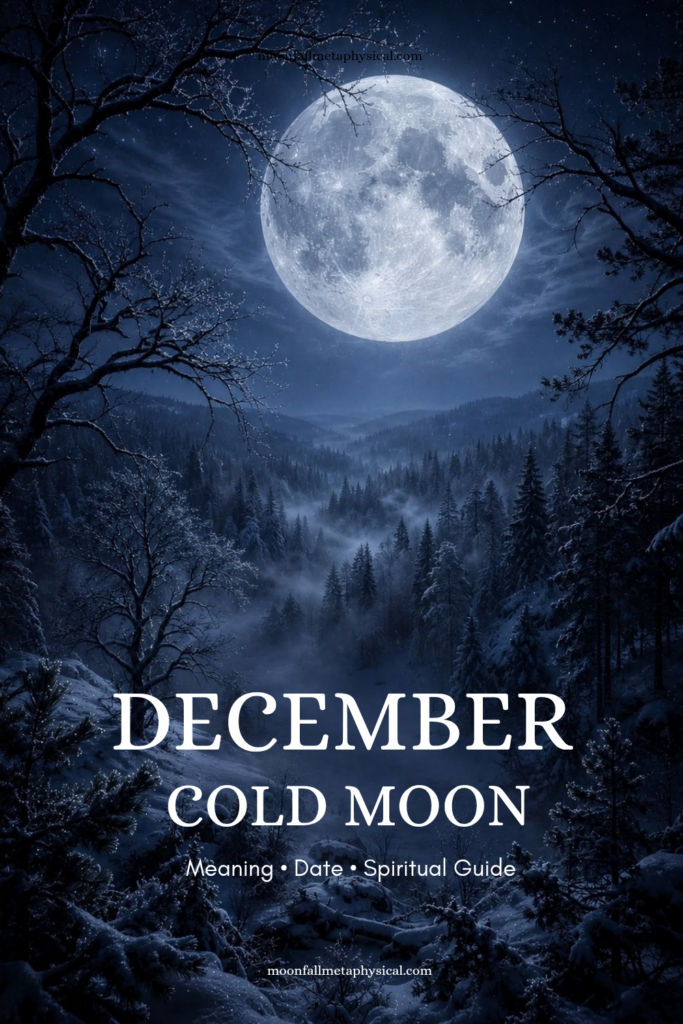
The December Full Moon is commonly known as the Cold Moon, a name that reflects the arrival of winter and the bitter temperatures of the Northern Hemisphere. With nights at their longest and the natural world settling into dormancy, this full moon has become associated with stillness, endurance, reflection, and the quiet strength needed to move through the darkest part of the year.
The name Cold Moon appears in traditional North American full moon naming lists popularized through sources such as the Maine Farmer’s Almanac. Moon names vary across cultures and communities.
Other names associated with December’s full moon include the Long Night Moon, a reference to the extended darkness around the Winter Solstice, and the Moon Before Yule, which connects the lunar cycle with the seasonal celebrations of midwinter. These names appear in different modern moon-name collections and should not be taken as universal historical names.
The Spiritual Meaning of the December Full Moon
The December Full Moon offers a natural opportunity to pause at the threshold between one year and the next. It arrives during a season when many people are reviewing their experiences, tending to their homes, and considering what they hope to change in the coming months.
The Cold Moon is associated with the following themes:
- Reflection and wisdom: Look back on the experiences that shaped your year and consider what they have taught you.
- Rest and restoration: Honour the need for quiet, sleep, and time away from constant demands.
- Protection and inner strength: Focus on the practices, relationships, and boundaries that help you feel grounded.
- Release and closure: Identify habits, expectations, or unfinished matters you are ready to leave behind.
- Hope and renewal: Even in the depths of winter, the days will gradually begin to lengthen after the Solstice.
The Cold Moon and the Winter Solstice
In 2026, the Winter Solstice falls on December 21, followed by the Full Moon on December 23 in North American time zones. This places the Cold Moon just over two days after the astronomical beginning of winter.
The proximity makes the two events a natural pairing for seasonal reflection. Yule celebrations often focus on the turning of the year, the return of increasing daylight, and the enduring promise of renewal. The full moon adds another point of reflection: a bright lunar presence during a season of long nights.
For those who celebrate Yule, this can be a meaningful time to light a candle, reflect on the year that has passed, or set intentions for the months ahead. You can explore more seasonal customs and witchcraft ideas in my Yule guide.
The Cold Moon in Cancer: Astrological Meaning
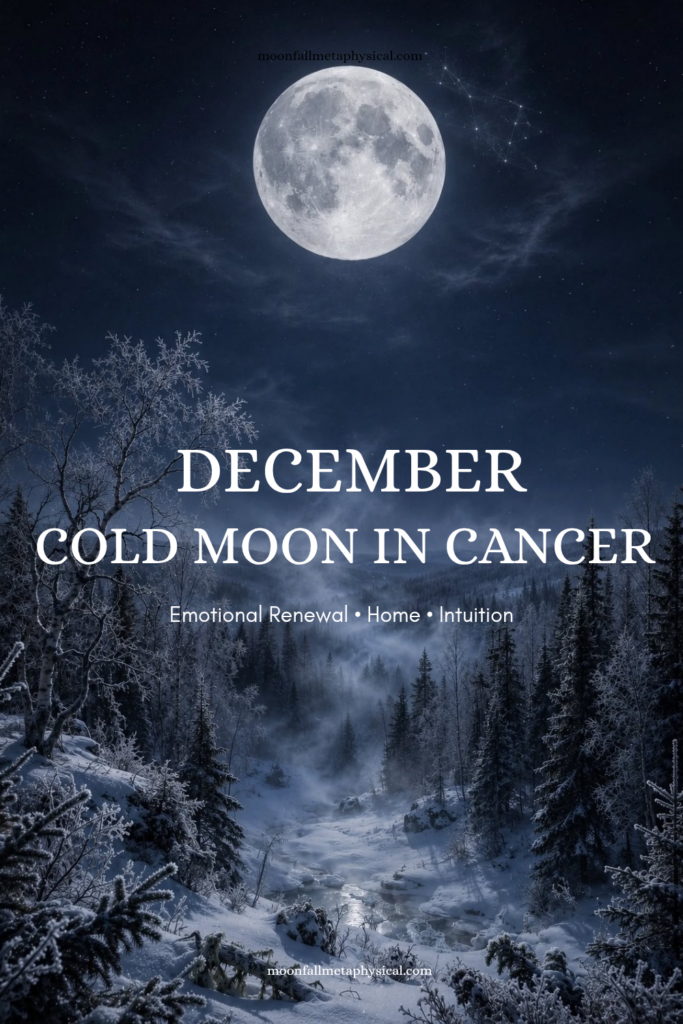
The December 2026 Full Moon falls in Cancer, a water sign traditionally associated with the Moon. In astrology, Cancer represents home, family, emotional security, intuition, and the private world we retreat to when we need comfort or restoration.
A Full Moon in Cancer brings these themes into focus. It can be a useful symbolic moment to consider where you feel at home, which relationships nourish you, and whether or not your everyday life leaves enough room for your emotional needs.
The Cancer–Capricorn Opposition
Every Full Moon occurs when the Sun and Moon occupy opposite sides of the zodiac. During the December 2026 Cold Moon, the Moon is in Cancer while the Sun is in Capricorn.
Cancer is associated with nurturing, belonging, and the inner world. Capricorn represents responsibility, ambition, structure, and long-term goals. Together, these signs invite reflection on the balance between caring for yourself and meeting your obligations.
Ask yourself:
- Have I been giving my responsibilities more attention than my own wellbeing?
- Does my home feel like a place where I can rest and recharge?
- Which relationships make me feel supported, and which may need clearer boundaries?
- Are the goals I’m pursuing still aligned with the life I want to build?
These questions can be especially relevant at the end of the year, when work, family commitments, and holiday preparations can leave little time for personal reflection.
Working With Cancer’s Lunar Energy
The Cancer Full Moon is often associated with nurturing, home protection, emotional reflection, and strengthening connections with loved ones. You could work with these themes by cleansing your living space, preparing a comforting meal, journaling about your needs, or performing a simple candle ritual focused on peace and security.
Water symbolism also fits naturally with Cancer’s astrological associations. A quiet bath, time spent beside a body of water, or a bowl of water placed on your altar can serve as a focus for meditation.
The Cold Moon offers an opportunity to bring attention back to your inner life before stepping into a new year. Instead of setting a long list of ambitious resolutions, consider choosing a few intentions that support both your responsibilities and your need for rest.
Cold Moon Rituals for Reflection, Release and Renewal
The December Full Moon is an opportunity to slow down, reflect on the year behind you, and prepare for the season ahead. In modern witchcraft, full moon rituals often focus on releasing what no longer serves you, renewing spiritual practices, and bringing greater awareness to the intentions you want to carry forward.
With the Cold Moon arriving shortly after the Winter Solstice in 2026, you can also weave its symbolism into your Yule celebrations. Choose a ritual that suits your practice, if you prefer candle magick, journaling, meditation, or a experiencing moment of quiet beneath the night sky.
1. Cold Moon and Returning Light Ritual
This ritual combines the reflective symbolism of the Cold Moon with the returning daylight associated with the Winter Solstice. It can be performed on the evening of the full moon or at another convenient time during the surrounding days.
You will need:
- One white candle
- A journal and pen
- A small natural object, such as a pinecone, stone, or fallen evergreen sprig
- A quiet space where you can sit comfortably
The ritual:
- Prepare your space. Tidy your altar or a small table, then place the candle and natural object before you. Take a few slow breaths and allow yourself to settle.
- Reflect on the year. Write down three experiences that taught you something important. They don’t need to be dramatic milestones; small changes and quiet victories count, too.
- Choose what to release. Consider one habit, expectation, or recurring worry that you no longer wish to carry into the new year. Write it down, acknowledging what it has taught you before deciding how you want to move forward.
- Light the candle. As you watch the flame, think about the light you want to nurture in your life. This might be creativity, confidence, peace at home, stronger boundaries, or more time for your spiritual practice.
- Set an intention. Write one clear intention for the coming months. Keep it realistic and within your influence, such as making time for rest or reconnecting with a meaningful practice.
- Close the ritual. Spend a few moments in silence before extinguishing the candle safely. Keep your written intention somewhere you can revisit it during the winter season.
The natural object can remain on your altar as a reminder of your intention until Imbolc or another seasonal milestone that holds meaning for you.
2. Cold Moon Release Ritual
The end of the calendar year can bring pressure to review every achievement and resolve every unfinished matter. This simple release ritual offers a quieter alternative: identify what you are ready to put down, without judging yourself for carrying it in the first place.
You will need:
- Paper and a pen
- A fireproof bowl or another safe place to dispose of the paper
- A candle, if desired
Write down one or two things you are ready to release. These might be unrealistic expectations, an unhelpful habit, or the feeling that you must have everything figured out before the new year begins.
Read your words privately, then tear up the paper and dispose of it. If you prefer a more symbolic approach, fold it away and recycle it later. Burning paper is optional and should only be done with appropriate fire precautions.
As you finish, ask yourself what could take the place of what you are releasing. Replacing self-criticism with patience, for example, gives your intention a positive direction.
3. Full Moon Journaling for the Year Ahead
The Cold Moon can also serve as a prompt for reflection before the busy holiday season and the arrival of a new year.
Find a comfortable place to write, and consider these questions:
- What am I proud of from the past year?
- What drained my energy, and what helped restore it?
- Which relationships and routines make me feel supported?
- What would I like to make more room for in my life?
- What is one small change I can begin carrying into 2027?
Let your thoughts develop naturally, and return to your journal whenever you need to reflect.
4. A Quiet Cold Moon Meditation
If elaborate rituals aren’t part of your practice, spend a few minutes in quiet observation instead. If the sky is clear, find a safe spot where you can see the Moon. If clouds or winter weather keep it hidden, sit by a window or choose a comfortable place indoors.
Breathe slowly and notice the sensations around you: the temperature of the air, the sounds of the evening, and the feeling of your body resting. Think about what the season is asking of you. Perhaps it is time to rest, reconnect with someone you love, finish a lingering task, or perhaps it’s time to allow yourself to take a slower pace.
Finish by choosing one word to guide you through the remainder of winter. It might be steadiness, nourishment, courage, or peace. Let that word become a point of focus as the year turns.
Best Crystals for the Cold Moon
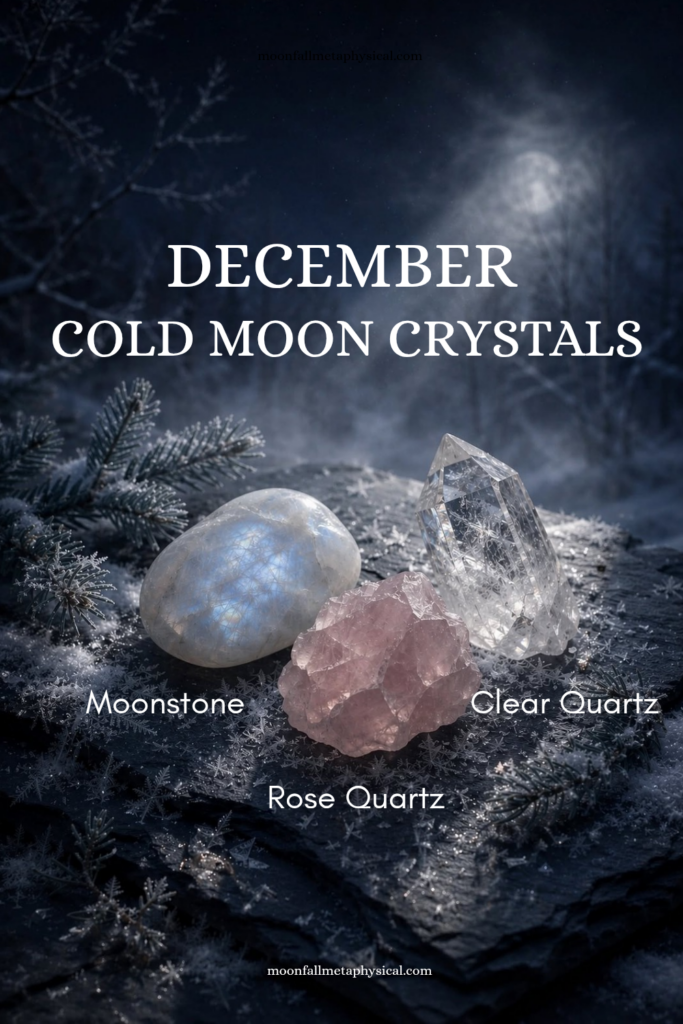
Certain stones are associated with the themes of the December Full Moon, including reflection, emotional balance, rest, and renewal. You can place them on your altar, hold one during meditation, or keep a favourite stone nearby while journaling.
Moonstone: Intuition and New Beginnings
Moonstone is often associated with lunar cycles, intuition, and change. Its soft, pearly appearance makes it a natural choice for a Cold Moon altar, particularly if you’re using this full moon as a moment to reflect on the year ahead.
Hold a moonstone while journaling, or place it beside your candle as you consider what you want to welcome into the next season. You could also use it as a reminder to make room for rest and listen to your own needs.
Rose Quartz: Compassion and Emotional Comfort
Rose quartz is traditionally linked with love, compassion, and kindness. During the busy end-of-year season, its symbolism can encourage you to consider how you speak to yourself and how you nurture the relationships that matter to you.
Place rose quartz in a quiet corner of your home or on your altar while reflecting on the people and experiences you’re grateful for. It can also serve as a reminder to extend yourself the same patience you offer others.
Clear Quartz: Clarity and Intention
Clear quartz is commonly used in as a symbol of clarity, focus, and intention. Its simple appearance works well with a winter altar, especially when paired with evergreen sprigs, a white candle, or a small bowl of seasonal natural objects.
Use clear quartz as a focal point while writing an intention for the coming months. Keep the intention specific and achievable, such as making more time for creativity, establishing a calming evening routine, or returning to a spiritual practice you enjoy.
Creating a Cold Moon Crystal Altar
Choose one or two crystals that appeal to you and arrange them with a few simple objects:
- A white or silver candle to represent moonlight and reflection
- An evergreen sprig or pinecone to evoke the winter season
- Your journal, with a written intention for the coming months
- A favourite crystal that represents a theme you want to explore
Keep the arrangement simple enough that it feels inviting rather than becoming another task on your holiday list.
Moonstone Jewellery for Your Lunar Practice
Moonstone is often associated with intuition, emotional awareness, and lunar energy in modern crystal traditions. If you’d like to carry that symbolism with you beyond your altar, a moonstone pendant is another way to incorporate it into your daily practice.
This 925 sterling silver moonstone pendant is an option for anyone who enjoys celestial jewellery and wants a wearable reminder of their connection to the Moon.
Cold Moon Affirmations for December
During the December Full Moon, choose words that reflect what you need most: rest, confidence, emotional balance, or the courage to begin again.
Read these affirmations quietly, write your favourites in your journal, or include one in your Cold Moon ritual.
- I honour the lessons of the year without carrying every burden into the next.
- I give myself permission to rest and restore my energy.
- I create a home and a life that support my wellbeing.
- I release expectations that no longer reflect who I am becoming.
- I welcome peace, warmth, and meaningful connection into my life.
- I trust myself to move forward one thoughtful step at a time.
- I make room for new beginnings without rushing the process.
- I carry the wisdom of the past year into the opportunities ahead.
- I allow the quiet of winter to nourish my creativity and intuition.
- I welcome the returning light with hope, patience, and an open heart.
Choosing a Cold Moon Intention
After reading the affirmations, choose the one that resonates most strongly with you. Write it somewhere you’ll see it throughout the winter months, such as in your journal, on your altar, or beside your bedside table.
You can also turn an affirmation into a practical intention. For example, “I give myself permission to rest” might inspire you to protect one evening each week for quiet time, while “I create a home that supports my wellbeing” could encourage you to make a small, comforting change to your surroundings.
The words themselves are a starting point. Let the choices you make in the days ahead give your intention meaning.
Welcoming the December Cold Moon
The December Cold Moon offers a moment to pause during the busy end of the year. With the Winter Solstice behind us and a new calendar year approaching, its symbolism invites reflection on what we’ve learned, what deserves our care, and what we hope to nurture in the months ahead.
As the year draws to a close, take what has served you well and give yourself permission to leave the rest behind. The turning of the seasons continues at its own pace, offering a reminder that rest and renewal belong together.
Plan Your Lunar Practice for 2027
If you enjoy following the Moon throughout the year, Llewellyn’s 2027 Magical Moon Calendar is a lovely resource to consider. It features twelve Moon-themed illustrations, magical spells and folklore, moon phases, eclipses, supermoons, and other lunar astrological information.
Hang it near your altar or keep it in your creative space to help plan full moon rituals, track important lunar dates, and find inspiration for your witchcraft practice throughout 2027.
Moonology Oracle Cards for Full Moon Reflection
Oracle cards can be a useful addition to a full moon journaling or reflection practice. The Moonology Oracle Cards by Yasmin Boland feature lunar phases and zodiac signs, with a guidebook to help interpret each card.
You could draw a card before your Cold Moon ritual, then use its message as a starting point for journaling about the year behind you and the intentions you want to carry into the new year.
Continue Your Seasonal Practice
If you’re exploring the spiritual traditions of winter, you may also enjoy my Yule guide, with seasonal folklore, witchcraft ideas, and ways to celebrate the Winter Solstice.
You can also watch the December Cold Moon video below for more lunar inspiration and ideas to incorporate into your own practice.