
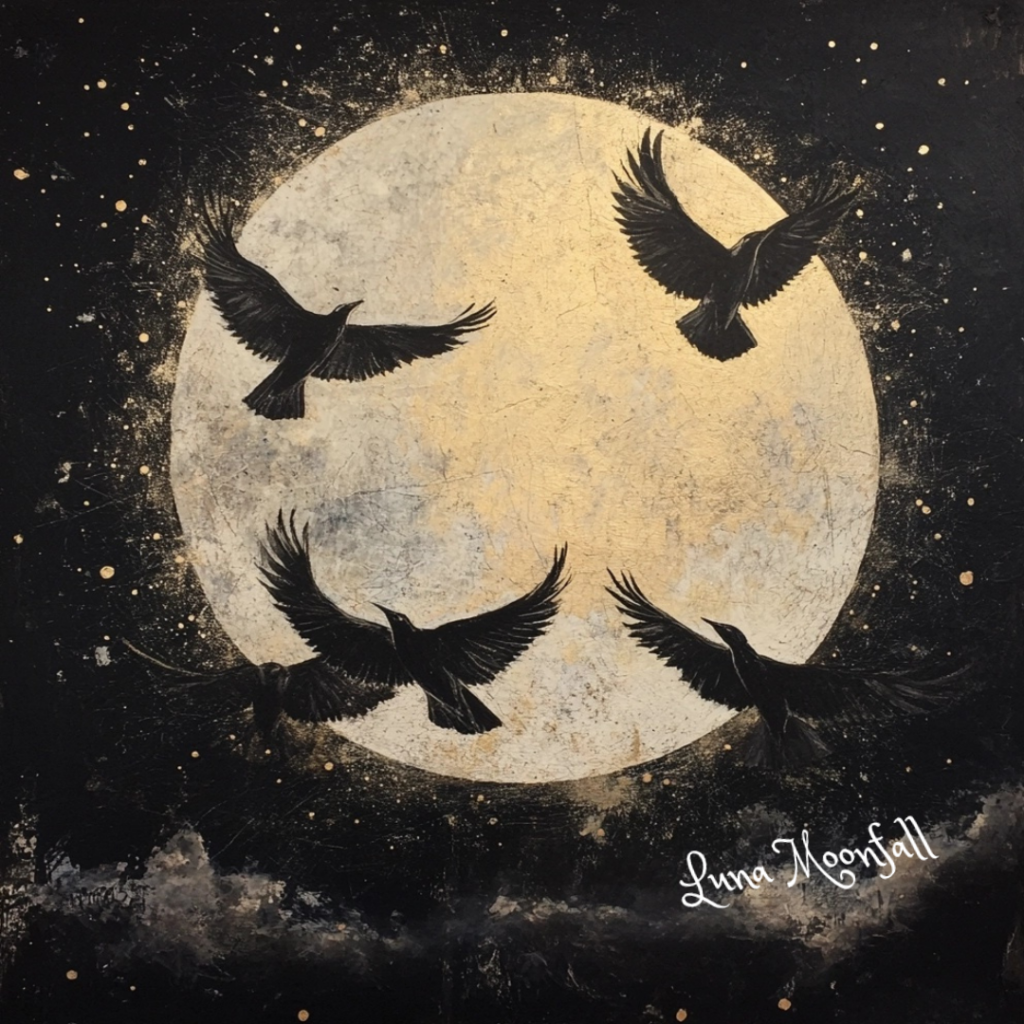
November has a different feeling to it. The days are shorter, the nights come early, and there is something about the darkness that makes us slow down and look inward.
Following Samhain, on November 16, many witches and devotees set aside time to honor Hekate (Hecate), the ancient Greek goddess associated with crossroads, thresholds, magic, night, and the mysteries of the unseen.
Hekate’s Night is a modern observance, not an ancient Greek festival that was traditionally held on November 16. Hekate was worshipped in the ancient world, and she had a strong connection to the lunar cycle through the Deipnon, but the November 16 date comes from modern devotional practice.
For those who observe it today, Hekate’s Night is an opportunity to work with her symbolism through ritual, divination, offerings, meditation, and reflection.
This post may contain affiliate links. If you choose to make a purchase through these links, I may earn a small commission at no additional cost to you. These commissions help support Moonfall Metaphysical and allow me to continue creating free content, guides, and resources for the community.
I only recommend products, books, and tools that align with the spirit of this content and that I believe may genuinely be interesting, useful, or inspiring to readers.
Who Is Hekate?
Hekate (or Hecate) is one of the more intriguing figures in ancient Greek religion. Her role changed and expanded over time, and she cannot really be reduced to simply being a “goddess of witchcraft.”
Hekate is strongly associated with crossroads, doorways, boundaries, transitions, night, magic, and the dead. She is often shown carrying torches or holding keys, both of which have become important symbols in modern Hekatean practice.
Her torches represent illumination and guidance, while her keys are associated with doors, thresholds, and access to places that are normally hidden.
Dogs are particularly associated with Hekate, and ancient references connect her with the restless dead and the boundaries between the living and the dead.
This is part of what makes Hekate such a fascinating deity for modern witches. She is often approached at times when life feels uncertain or when one chapter is ending and another hasn’t quite begun.
Standing at a crossroads is, after all, a very Hekatean image.
Why Celebrate Hekate’s Night?
Hekate’s Night is observed on November 16. There is no evidence that ancient Greeks celebrated a festival to Hekate on this particular date. Instead, November 16 is a modern devotional observance that has developed among contemporary pagans and witches.
Hekate was also honored through the Deipnon, a recurring observance connected with the end of the lunar month. The Deipnon included offerings to Hekate and was associated with purification and the household.
For modern practitioners, Hekate’s Night can be a good time to focus on:
- Shadow work
- Divination
- Protection
- Ancestor work
- Cleansing
- Letting go of old patterns
- Major life changes
- Decisions and crossroads
You don’t need an elaborate ritual to observe the night. A candle, a tarot deck, a quiet prayer, or a simple offering can be enough.
How to Celebrate Hekate’s Night
There are plenty of ways to honor Hekate, and your practice doesn’t have to look exactly like anyone else’s.
Create an Altar for Hekate
Start with a candle and a few objects that have meaning to you.
Black, silver, and deep purple are commonly used in modern Hekatean practice. You might also include a key, torch, moon imagery, or a small statue or image of Hekate.
Dogs are especially associated with her, so an image or small figure of a dog can also be appropriate.
If you’d like to leave an offering, traditional offerings associated with Hekate include garlic, eggs, bread, honey, wine, and coins.
You aren’t required to buy anything special. If you’re creating an altar from things you already have around the house, select objects that represent what you’re asking Hekate to help you with.
Is there a door you want opened? A situation you need clarity about? Something you’re ready to leave behind?
Let that guide your altar.
Meditate at a Crossroads
Crossroads are probably Hekate’s most recognizable symbol.
They represent choices, transitions, and the point where one road becomes several.
If you have a safe place nearby where paths meet, you can spend a few quiet minutes there in reflection. Just be mindful about leaving offerings outdoors. Food and other objects can create problems for wildlife or become litter, so an offering at home is often the better option.
You can also create a crossroads through visualization.
Close your eyes and picture yourself standing at a crossroads at night. Imagine Hekate nearby with her torches lighting the different paths.
Instead of asking, “Which path should I take?”, try asking:
What do I need to know before I choose?
That small change can make a tarot reading or meditation much more interesting.
Try Divination
If you’re interested in tarot, scrying, pendulum work, or another form of divination, Hekate’s Night is a fitting time to practice.
Place a key beside your cards or divination tool as a symbol of unlocking knowledge.
You could ask questions such as:
- What am I not seeing clearly?
- What am I ready to leave behind?
- What lesson should I carry forward?
- What should I consider before making this decision?
- Where do I need more courage?
- What is influencing the situation beneath the surface?
Sometimes the most useful reading is the one that helps you look at a situation differently.
Do Some Shadow Work
Hekate’s connection with darkness makes this a good night for some honest journaling.
Shadow work isn’t about finding everything that’s wrong with you. It’s about looking at the parts of yourself that you usually prefer to avoid.
Take out your journal and write about something you’ve been putting off, a fear that keeps coming up, or a pattern you’d like to understand better.
Try asking yourself:
What part of myself am I avoiding?
What am I afraid will happen if I let this go?
What have I learned from this experience?
What am I ready to do differently?
If you work with herbs, you can incorporate an herb associated with cleansing or protection into your ritual. Just make sure you know whether an herb is safe to burn, handle, or consume before using it.
Light a Candle for Protection
Hekate’s torches make candle work a natural addition to a Hekate’s Night ritual.
Choose a candle and place it somewhere safe. Black, white, or silver are common choices.
As you light it, focus on the people, places, and parts of your life you want protected.
You can use this invocation or write your own:
Hekate, Torchbearer and Guardian,
stand beside me at this threshold.
Illuminate my path and protect my home.
Give me the courage to face what lies ahead,
and the wisdom to know which doors to open.
Hail Hekate.
Let the candle burn for as long as it is safe to do so, then extinguish it before leaving the room.
Hekate’s Night and the Deipnon
You’ll sometimes see Hekate’s Night and the Deipnon treated as though they are the same celebration, but they aren’t.
The Deipnon was an ancient observance connected with the end of the lunar month. Offerings were made to Hekate, often outside the home or at a crossroads, and the observance was associated with purification and the dead.
The timing therefore followed the lunar calendar, not November 16.
Hekate’s Night on November 16 is a much more recent tradition. There isn’t an ancient Greek source establishing November 16 as Hekate’s festival day. Today’s practitioners have adopted the date as a dedicated night for honoring her.
That distinction is worth keeping in mind when researching Hekate. There is a lot of modern material online that blends ancient Greek practices with newer witchcraft traditions.
Both can be meaningful, but they aren’t necessarily the same thing.
Modern Ways to Work with Hekate
You don’t have to wait for November 16 to work with Hekate.
Some people develop a regular devotional practice, while others connect with her during particular moments of transition or when they feel drawn to her symbolism.
Here are a few simple ideas:
- Keep a small devotional altar with a candle, key, image, or another meaningful object.
- Light a candle when you need clarity or guidance.
- Keep a tarot or divination journal and record your readings and reflections.
- Learn about Hekate’s history by reading ancient sources as well as modern interpretations.
- Mark important transitions in your life with a small ritual or devotional offering.
- Practice acts of kindness as part of your devotional practice.
- Keep a dream journal if dreams and nighttime experiences are an important part of your practice.
A devotional practice doesn’t have to become another item on your to-do list. Sometimes keeping it simple is what makes it sustainable.
Hekate Correspondences
Correspondences can vary considerably between traditions, particularly when ancient sources and modern witchcraft practices are combined.
Here are some commonly used Hekate correspondences:
Symbols: Keys, torches, crossroads, dogs, the moon
Colors: Black, silver, deep purple
Crystals: Obsidian, moonstone, smoky quartz
Herbs: Garlic, mugwort, lavender, black nightshade
Offerings: Eggs, garlic, bread, honey, wine, coins, incense
Moon Phase: Dark moon / waning moon
Animals: Dogs, snakes
If you are building your own practice with Hekate, take some time to look into where individual correspondences come from. You may find that some have ancient roots while others come from much more recent traditions.
An Invocation to Hekate
You can use this invocation during your Hekate’s Night ritual, meditation, or devotional practice:
Hekate, Keeper of the Crossroads,
Bearer of the Torch,
Guardian of the Threshold,
I call upon your wisdom.
Illuminate the path before me,
Guide me through the shadows,
And help me see what I cannot yet see.
Guard the doors I cross,
And give me courage for the road ahead.
Hail Hekate.
A Hekate’s Night Reflection
Before you finish your ritual, sit with your candle for a few minutes.
Think about where you are right now. Is there something coming to an end? A decision you’ve been avoiding? A door you’re hoping will open?
You might journal about these questions:
What crossroads am I standing at?
What am I ready to leave behind?
What am I afraid to choose?
What do I need more clarity about?
What would I do if I trusted myself?
Don’t feel pressured to have all the answers tonight.
That’s one of the reasons the image of Hekate standing at a crossroads is so powerful. Sometimes the point isn’t knowing exactly where the road ends. It’s being willing to stand at the crossroads, light a torch, and take the next step.
Whether you mark Hekate’s Night with a full ritual, a tarot reading, an offering, or a few quiet minutes with a candle, November 16 can be a chance to slow down and reconnect with your own path.
Blessed Hekate’s Night. May her torches light your way. 🗝️🕯️