
When the fires of Beltane crackle and dance beneath the stars, one ancient name whispers through the smoke: Belenus.
Revered across the Celtic world as a god of light, healing, and vitality, Belenus (also known as Bel, Belenos, or Belinus) shines as one of the most radiant figures in Celtic mythology. But who was he, really? And why does he still matter today?
Who is Belenus?
Belenus (also Bel) is often referred to as the God of light and the sun, associated with the power of fire, healing, and renewal. His name is thought to mean “bright one” or “shining one,” which fits nicely with his solar symbolism. He was worshipped widely across the Celtic world from Gaul and Northern Italy to Britain and Ireland and was sometimes equated with the Roman god Apollo during the Roman occupation of Celtic lands. He has particular authority for the welfare of sheep and cattle. The Feast of Beltane is for ‘Fire of Bel’.
While many Celtic deities are cloaked in mystery, Belenus left a surprisingly bright trail through time. Shrines, inscriptions, and festivals dedicated to him give us glimpses of his influence.
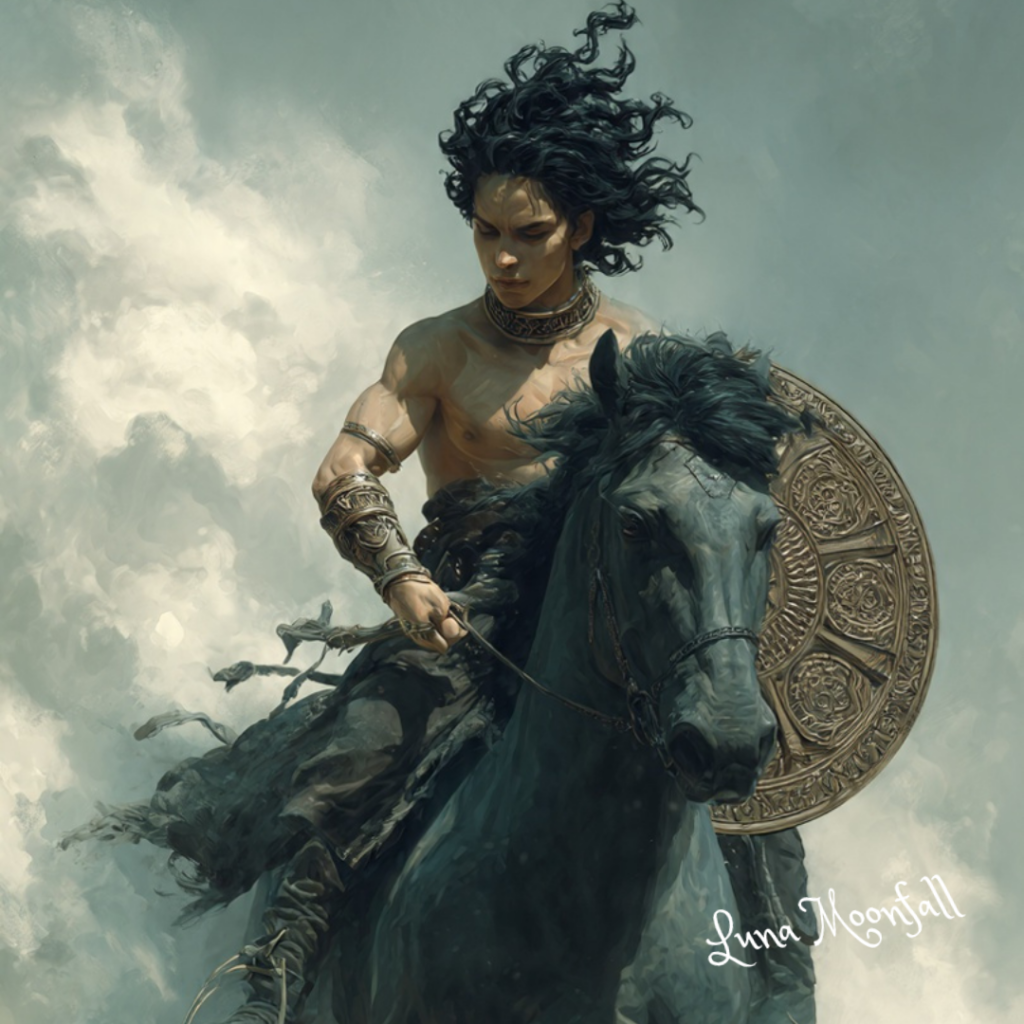
Belanus was often described and depicted as:
Youthful and Radiant: Reflecting his connection to light and the sun.
Riding a Chariot or Horse: Sometimes shown traversing the sky in a horse-drawn chariot, much like the Indian god Surya or the Greek Apollo.
With a Solar Wheel: The wheel was a common symbol associated with him, sometimes used as a shield.
Strong with Curled Black Hair and a Shining Torc: One depiction suggests a powerful young man with dark, curly hair and a magical, bright torc (a neck ring).
So, essentially, he was a youthful, vibrant, light-bringing god, deeply connected to the sun’s power, healing, and the fertility of the land.
Attributes and Belenus Symbols
- The Sun – bringing warmth, growth, and clarity.
- Healing and Medicine – especially through thermal springs and sacred waters.
- Light and Fire – as tools of purification and transformation.
- Horses – symbols of vitality, speed, and the solar journey across the sky.
Some depictions even show him riding a chariot pulled by horses of light, echoing the solar imagery found in many ancient traditions.
Deities Associated with Belenus
Apollo (Greco-Roman)
The most direct association are that Romans equated Belenus with Apollo, especially in his roles as a god of healing, light, and prophecy.
Like Belenus, Apollo was also linked to solar energy, music, and medicine.
In Roman Gaul and Celtic Italy, inscriptions often refer to “Apollo Belenus.”
Lugh (Irish Celtic)
While not the same deity, Lugh and Belenus share solar aspects and are both considered bright gods.
Lugh is associated with skill, crafts, light, and leadership, and some scholars suggest a potential overlap or regional variant relationship.
In Irish mythology, Lugh is the shining warrior of the Tuatha Dé Danann.
Grannus
A Celtic healing god, Grannus was also associated with thermal springs and was sometimes paired with Apollo or Belenus.
Shrines to Grannus often appear near those of Belenus, hinting at a shared or complementary function in health and water-based rites.
Maponos
A youthful Celtic deity linked to healing and music, sometimes seen as a “divine son” figure.
Occasionally equated with Apollo as well, and sometimes thought to be connected with Belenus in regions where multiple solar or healing deities coexisted.
Brigid (pan-Celtic goddess)
While Belenus is masculine and Brigid feminine, both deities are linked to healing, fire, and light.
In a modern context, they can be seen as complementary forces; Belenus of the sun, Brigid of the hearth.
The Festival of Beltane: Honoring Belenus
You can’t talk about Belenus without mentioning Beltane, the fire festival that bears his name. Held on May 1st, Beltane marks the midpoint between the Spring Equinox and Summer Solstice…a time of fertility, fire, and flourishing life. Ancient Celts would light twin bonfires and pass between them for purification and blessing, calling on Belenus for protection and vitality in the growing season.
For modern practitioners, honoring Belenus at Beltane can be as simple or elaborate as you wish.
Consider:
- Lighting candles or a sacred fire with intention.
- Working with solar herbs like St. John’s Wort, calendula, or rosemary.
- Creating a healing charm or solar talisman.
- Meditating in the sunlight and offering gratitude for growth and renewal.
Belenus in Modern Practice
If you’re a modern witch, pagan, or Celtic spiritualist, Belenus can be a powerful ally in your practice. Call on him for:
Healing spells or rituals.
Clarity in decision-making.
Energy work, especially during the day or in alignment with solar cycles.
Solar magic or fire-based ceremonies.
He’s also an excellent guide when working with the Wheel of the Year, particularly during the bright half when the sun reigns and nature thrives.
Though Belenus may not be as widely known today as some other deities, his presence still shines in the traditions, stories, and seasonal celebrations we honor. Whether you’re drawn to the healing warmth of the sun, the sacred power of fire, or the wisdom of ancient Celtic paths, Belenus invites you to stand in your own light and thrive.☀️