
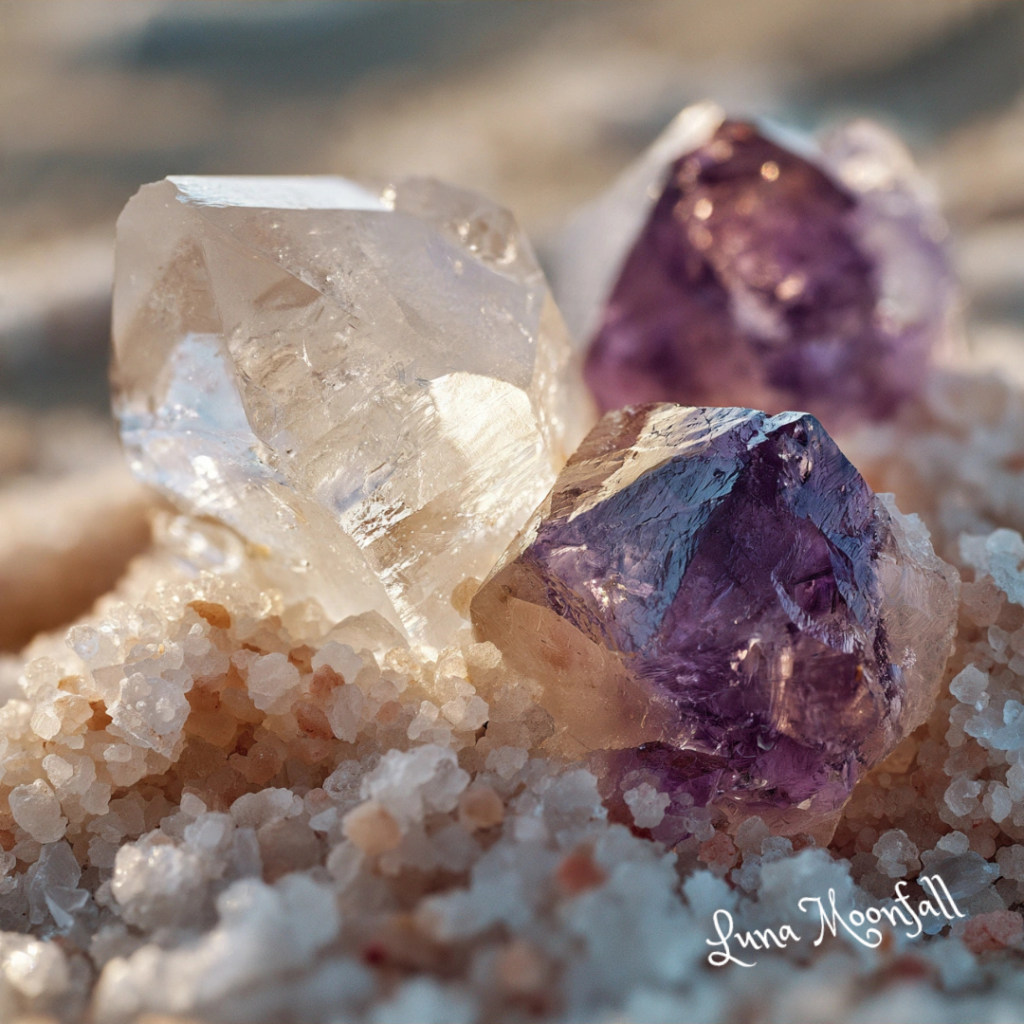
For centuries, salt has been used as a powerful cleansing and purification tool. From ancient spiritual practices to modern witchcraft traditions, salt is often associated with protection, grounding, and the removal of unwanted energy.
Because of this, many crystal enthusiasts turn to salt when they want to energetically cleanse their stones. However, while salt can be an effective cleansing method for some crystals, it can permanently damage others.
Before burying your favorite crystal collection in a bowl of sea salt, here’s everything you need to know.
This post may contain affiliate links. If you choose to make a purchase through these links, I may earn a small commission at no additional cost to you. These commissions help support Moonfall Metaphysical and allow me to continue creating free content, guides, and resources for the community.
I only recommend products, books, and tools that align with the spirit of this content and that I believe may genuinely be interesting, useful, or inspiring to readers.
Why Is Salt Used to Cleanse Crystals?
Salt has long been believed to absorb and neutralize unwanted energy. In many magical traditions, it is used to create protective boundaries, purify ritual tools, and cleanse spaces.
When used for crystal cleansing, salt is thought to help:
- Remove stagnant energy
- Clear energetic residue from previous owners
- Reset crystals after intensive spiritual work
- Prepare stones for charging or intention setting
- Ground highly active or overwhelming energies
How to Cleanse Crystals in Salt
Method 1: Dry Salt Bed
This is generally considered the safest salt cleansing method.
- Fill a ceramic, glass, or wooden bowl with sea salt or Himalayan salt.
- Place a small cloth or piece of paper on top of the salt if desired.
- Set your crystal on the salt bed.
- Leave it overnight or for up to 24 hours.
- Remove the crystal and dispose of the salt afterward.
Many practitioners prefer this method because the crystal does not come into direct contact with moisture.
Method 2: Burial in Dry Salt
For crystals that are known to be salt-safe:
- Fill a bowl with dry sea salt.
- Completely bury the crystal.
- Leave it for several hours or overnight.
- Remove and gently brush away excess salt.
Use this method only for durable, non-porous stones.
Method 3: Salt Bowl Nearby
If you’re uncertain whether a crystal can tolerate salt, place the crystal beside a bowl of salt rather than directly in it.
Many practitioners believe the salt still helps absorb unwanted energy from the surrounding environment without risking damage to the crystal itself.
Can You Reuse Crystal Cleansing Salt?
Many witches, crystal practitioners, and folk magic traditions do not reuse salt that has been used for cleansing. The belief is that the salt has already absorbed unwanted, stagnant, or excess energy and has completed its purpose.
Even if you don’t personally believe the salt literally absorbs energy, reusing it repeatedly can introduce dust, crystal residue, oils from handling, and moisture from the environment.
For that reason, I generally recommend:
- Single-use for spiritual cleansing
- Fresh salt for each cleansing session
- Do not use the salt afterward for cooking, bathing, or consumption
Best Ways to Dispose of Cleansing Salt
Return It to the Earth
One common method is to sprinkle the salt outdoors on bare ground while expressing gratitude for its service.
However, use moderation. Large amounts of salt can damage soil and plants.
Good locations:
- Gravel driveways
- Rocky areas
- Paths and walkways
Avoid:
- Gardens
- Lawns
- Vegetable beds
- Areas near sensitive plants
Dispose of It in Household Trash
This is often the most practical and environmentally friendly option, especially if you use salt frequently.
Many modern practitioners simply thank the salt and place it in the trash.
Running Water (With Caution)
Some traditions suggest dissolving the salt in running water.
However, because excessive salt can affect waterways and ecosystems, this is generally not the most environmentally responsible option unless you’re disposing of a very small amount.
A Little-Known Historical Detail
Many historical folk magic traditions treated salt as a protective substance rather than a disposable “energy sponge.” In some practices, salt was left at doorways, windows, or boundaries for extended periods and only replaced when it became dirty or physically depleted.
The modern idea that salt instantly becomes “full” after a single use is relatively recent and varies widely between spiritual communities.
If you’re using a bowl of salt for cleansing crystals without the crystals touching the salt, some practitioners choose to reuse the salt several times before replacing it.
For example:
- Salt bowl on altar = reuse for weeks or months
- Crystal buried directly in salt = discard after use
This approach balances practicality with traditional spiritual symbolism and is becoming increasingly popular among environmentally conscious practitioners.
Crystals That Can Usually Be Cleansed in Salt
Hard, durable stones generally tolerate dry salt cleansing well.
Examples include:
- Clear Quartz
- Smoky Quartz
- Rose Quartz
- Amethyst
- Citrine
- Carnelian
- Tiger’s Eye
- Jasper
- Agate
- Aventurine
Even with these stones, prolonged exposure is unnecessary. A few hours to overnight is usually sufficient.
Crystals That Should NOT Be Cleansed in Salt
Many crystals contain water, soft minerals, metallic compounds, or delicate structures that can react poorly to salt.
Avoid salt cleansing with:
Selenite
Selenite is extremely soft and water-soluble. Salt can scratch and damage its delicate surface.
Malachite
Malachite contains copper and is relatively soft. Salt exposure may damage its finish over time.
Lepidolite
This mica-rich crystal tends to flake and deteriorate when exposed to abrasive materials.
Angelite
Angelite can absorb moisture and become damaged.
Celestite
Celestite is fragile and prone to surface deterioration.
Calcite
Most forms of calcite are relatively soft and can become scratched or dulled.
Pyrite
Pyrite can react with moisture in the environment and may tarnish.
Hematite
Salt can gradually damage polished hematite surfaces.
Azurite
Azurite is sensitive and may deteriorate with repeated salt exposure.
Fluorite
Fluorite is much softer than many people realize and scratches easily.
Turquoise
Natural turquoise is porous and can absorb substances from its environment.
Kyanite
While kyanite rarely requires energetic cleansing according to many crystal traditions, salt exposure can still damage delicate specimens.
A Little-Known Fact About Salt Cleansing
Many modern crystal guides recommend burying crystals directly in salt, but historically, not all traditions actually placed sacred objects into salt.
In numerous folk practices, salt was used around an object rather than directly on it. Salt circles, bowls of salt, and protective boundaries were often preferred over direct contact.
For this reason, many witches and crystal workers prefer to use fresh salt for each cleansing session and dispose of it afterward.
Should You Use Sea Salt or Himalayan Salt?
Both are commonly used.
Sea salt is often chosen for purification and cleansing rituals.
Pink Himalayan salt is popular for grounding, protection, and calming energy.
From a practical perspective, either can work for crystal cleansing. The most important factor is ensuring the crystal itself can safely tolerate salt exposure.
What About Salt Water?
Salt water cleansing is much riskier than dry salt cleansing.
Even crystals that tolerate dry salt may become damaged when submerged in salt water. Tiny fractures can trap moisture, leading to cracks, discoloration, or structural weakening over time.
For this reason, many experienced crystal practitioners avoid salt water entirely unless they are working with extremely durable stones such as quartz.
Alternatives to Salt Cleansing
If you’re unsure whether a crystal is salt-safe, consider these gentler methods:
- Moonlight cleansing
- Sound cleansing with bells or singing bowls
- Smoke cleansing with incense or herbs
- Visualization and intention work
- Selenite charging plates
- Earth burial (for suitable stones)
- Crystal grids
These methods eliminate the risk of physical damage while still supporting your spiritual practice.
Closing Thoughts
Salt can be an effective and traditional way to cleanse crystals, but it is not a universal solution. Understanding a crystal’s hardness, mineral composition, and porosity is just as important as understanding its metaphysical properties.
When in doubt, choose a gentler cleansing method. Protecting the physical integrity of your crystals ensures they can continue supporting your practice for years to come.
Remember: a damaged crystal cannot be restored as easily as stagnant energy can be cleared.