
When winter settles in and the nights reach their longest, Yule offers a natural time to look toward the animals that have long shared our stories, folklore, and seasonal traditions.
Some animals have a direct connection to Yule traditions, particularly in Scandinavian and Germanic folklore. Others have become associated with the winter season through mythology, folklore, modern witchcraft, and their place in the natural world.
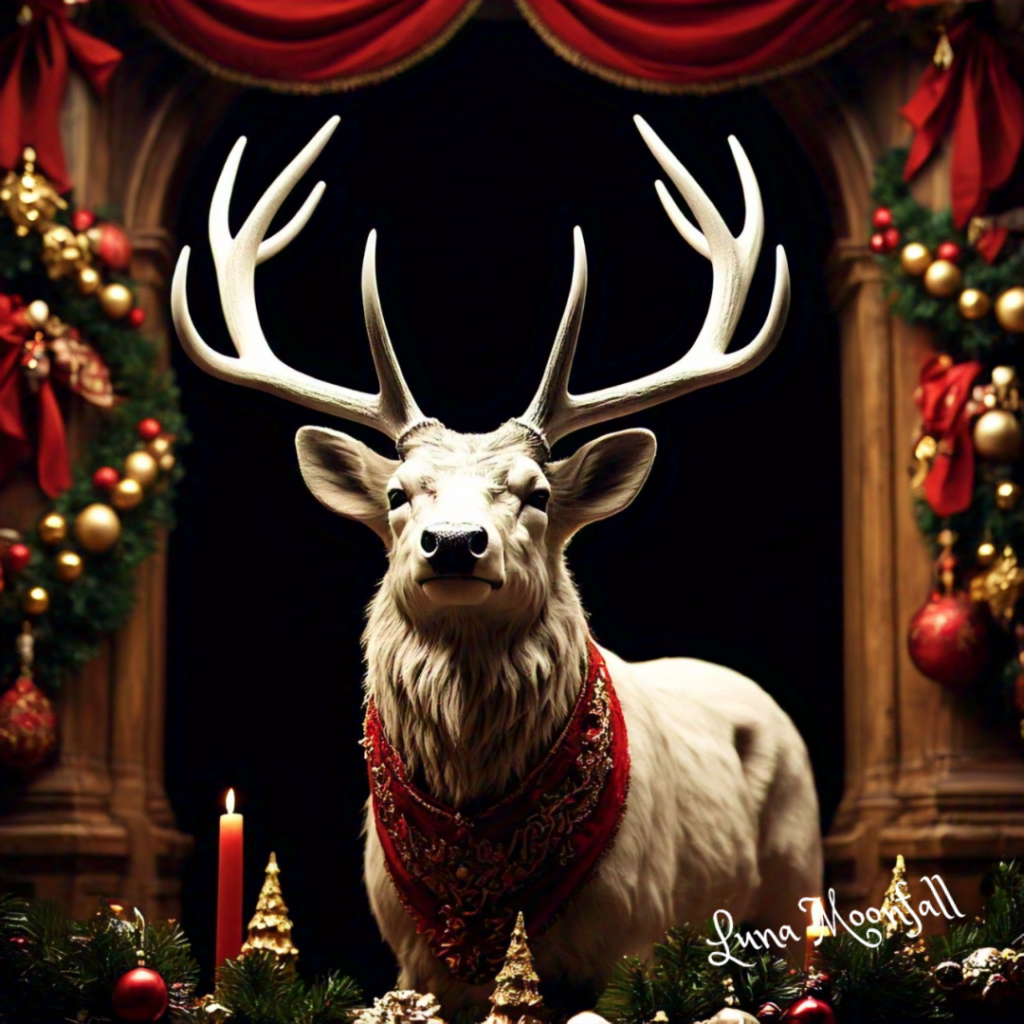
From the antlered stag to the traditional Yule Goat, each animal carries its own history and symbolism. They can also provide inspiration for altar work, meditation, divination, and other forms of seasonal practice.
This post may contain affiliate links. If you choose to make a purchase through these links, I may earn a small commission at no additional cost to you. These commissions help support Moonfall Metaphysical and allow me to continue creating free content, guides, and resources for the community.
I only recommend products, books, and tools that align with the spirit of this content and that I believe may genuinely be interesting, useful, or inspiring to readers.
The Spirit Animals of Yule Video
Welcome the magic of Yule, an ancient pagan celebration of light returning after the longest night. In this video, we touch on the mystical animals of the Yule Sabbat: the Stag, Bear, Wolf, Owl, and Goat. Each animal rich in symbolism and spiritual meaning.
Want to go deeper into Yule? Grab the Yule Printable Sabbat Guide and explore my Yule videos on YouTube for rituals, folklore, symbolism, and seasonal inspiration.
The Stag: Strength and the Wild
The stag has a strong place in European folklore and modern pagan traditions. Its impressive antlers, seasonal shedding, and regrowth have made the animal a natural symbol of renewal and the changing cycles of life.
The antlered figure also appears in Celtic and European folklore, including modern interpretations of Cernunnos and Herne. These traditions are varied, however, and the idea of a single universal “King of the Forest” is largely a modern interpretation rather than an ancient title shared across Celtic traditions.
Stag Symbolism
The stag can represent:
- Strength and endurance
- Renewal and regeneration
- The wild and untamed natural world
- Leadership and presence
- The cycles of life, death, and rebirth
Working With Stag Symbolism
If the stag has a place in your Yule practice, you might:
- Place an image of a stag on your altar.
- Meditate on the natural cycle of antler growth and renewal.
- Spend time walking through a forest or other natural setting.
- Use stag imagery when reflecting on personal strength or changes you want to carry into the coming year.
The Bear: Rest and Inner Strength
Winter and the bear are closely connected in the imagination of many northern cultures. Bears spend much of the cold season in dens, making them a fitting symbol for retreat, rest, and conserving energy.
Rather than viewing winter as a period when nothing is happening, the bear offers another perspective: sometimes growth begins quietly, long before there is anything to see above the surface.
Bear Symbolism
The bear can represent:
- Rest and restoration
- Inner strength
- Protection
- Solitude and reflection
- Patience
- The wisdom found in stillness
Working With Bear Symbolism
Try creating a quiet winter space for yourself with blankets, candlelight, a journal, or a favourite book. Use it as a place to slow down and reflect on the year behind you.
You could also meditate with bear imagery while considering where you need more rest, stronger boundaries, or time away from the noise of everyday life.
The Wolf: Instinct and Community
The wolf has appeared throughout the folklore and mythology of northern Europe and beyond. Wolves can represent both the solitary individual and the strength of a social group, making them an interesting symbol for the balance between independence and belonging.
Winter also brings wolves into many traditional stories about the wild, the night, and the dangers beyond the safety of the home.
Wolf Symbolism
The wolf can represent:
- Instinct and intuition
- Loyalty
- Independence
- Community and family
- Protection
- The mysteries of the night
Working With Wolf Symbolism
Spend some quiet time outdoors after sunset, if it is safe to do so, and listen to the sounds around you. You might also use wolf imagery during meditation or journaling when exploring intuition, relationships, or personal boundaries.
For a simple Yule practice, light a candle for the people who make up your own circle of support and take a moment to acknowledge what those connections mean to you.
The Owl: Wisdom and the Night
Owls have long been associated with wisdom, mystery, darkness, and the unseen. Their ability to move silently through the night makes them particularly fitting for a season when darkness dominates the landscape.
Their symbolism varies considerably between cultures. In some traditions, owls are associated with wisdom and knowledge; in others, they can be connected with death, omens, or the supernatural.
That contrast makes the owl especially interesting for magical work.
Owl Symbolism
The owl can represent:
- Wisdom and knowledge
- Intuition
- Observation
- Mystery
- The unseen
- Seeing beyond appearances
Working With Owl Symbolism
The quiet nature of the owl lends itself well to divination and reflection. You might use an owl image on your altar while working with tarot, runes, pendulum divination, or another practice that helps you look beneath the surface of a situation.
You can also simply spend a few minutes in silence, allowing yourself to notice what you normally overlook.
The Yule Goat: A Scandinavian Tradition
Of all the animals associated with Yule, the goat has one of the clearest connections to the traditional Scandinavian celebration.
The Yule Goat, or Julbock, is a familiar figure in Swedish Christmas tradition. Small goats made from straw are still used as seasonal decorations, and the tradition has become an enduring part of Scandinavian Christmas culture.
The goat also has connections to Norse mythology. The thunder god Thor is said to travel in a chariot drawn by the goats Tanngrisnir and Tanngnjóstr.
The history of the Yule Goat is more complicated than simply being a symbol of Thor, though. Its exact origins and development are debated, and the modern Julbock tradition developed through several layers of Scandinavian folklore and Christmas customs.
Yule Goat Symbolism
The goat can represent:
- Strength and vitality
- Stubbornness and determination
- Abundance
- Festivity
- Endurance
- The wild and domestic worlds meeting
Working With the Yule Goat
The Yule Goat is an easy symbol to bring into your seasonal decorations.
Try placing a small straw goat on your altar or making one yourself. You could also include goat imagery in a Yule prosperity working or use it as a reminder of persistence when reflecting on challenges you’ve faced throughout the year.
Other Animals Connected With Yule
The animals above aren’t the only creatures that appear in winter folklore and modern Yule traditions.
The boar is particularly significant in Germanic and Scandinavian traditions. The boar was associated with Freyr, a Norse god connected with fertility, prosperity, peace, and abundance. Boar imagery also appears in historical descriptions of seasonal feasting and religious customs.
The horse has an important place in northern European mythology and folklore. Horses were associated with travel, warriors, the gods, and the supernatural. Odin’s eight-legged horse, Sleipnir, is one of the best-known examples from Norse mythology.
The raven appears throughout Norse mythology, most famously as the birds Huginn and Muninn associated with Odin. Their connection with thought, memory, knowledge, and observation makes the raven a fitting winter symbol for reflection and looking beyond what is immediately visible.
These animals don’t all have a single, historically documented “Yule meaning.” Their associations come from different myths, cultures, and periods. That distinction is worth keeping in mind when working with seasonal symbolism.
Bringing Yule Animal Symbolism Into Your Practice
You don’t need a complicated ritual to work with animal symbolism during Yule. Sometimes the simplest practices are the ones that leave the most room for reflection.
Create a Yule Animal Altar
Choose one animal whose symbolism speaks to you and give it a small place on your altar. This could be an image, figurine, carving, ornament, or even a symbol you’ve drawn yourself.
Add seasonal elements such as evergreen branches, pinecones, candles, stones, or other natural objects.
Meditate With an Animal Symbol
Sit somewhere quiet and focus on the animal you’ve chosen.
Consider what you associate with it. What qualities does it represent to you? Is there something about its behaviour, habitat, or place in folklore that mirrors something happening in your own life?
Write down anything that comes to mind afterward.
Explore Animal Symbolism Through Divination
Animal imagery can work beautifully alongside tarot or other forms of divination.
You might ask:
- What strength should I carry into the coming year?
- What do I need to release before moving forward?
- Where would more patience serve me?
- What am I not seeing clearly?
- What part of myself needs rest?
- What lesson is this season offering me?
Spend Time Outside
Winter has a different character from the rest of the year. Take a walk and pay attention to the signs of life around you.
Tracks in the snow, birds in the trees, feathers, animal calls, nests, and other small details can turn an ordinary walk into an opportunity for observation.
You don’t need to interpret every encounter as a supernatural message. Sometimes noticing the natural world is enough.
Yule and the Animals Around Us
Yule is often described as a celebration of light returning after the longest nights, but winter itself deserves a place in that story.
Animals have their own ways of surviving the season. Some migrate. Some hibernate or enter periods of dormancy. Others remain active beneath the cold sky, adapting to a landscape that looks very different from the one they knew in summer.
The stag, bear, wolf, owl, goat, boar, horse, and raven each bring different stories and associations to the season. Some come from ancient mythology, some from regional folklore, and some from the evolving practices of modern witchcraft.
That mixture is part of what makes seasonal symbolism so interesting.
As you celebrate Yule, consider choosing one animal to represent something you want to carry with you into the returning light: strength, rest, intuition, perseverance, wisdom, or simply a deeper connection with the natural world.
The longest night doesn’t last forever. 🌲🕯️